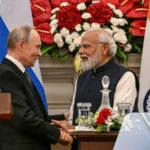
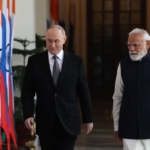
At a summit with Prime Minister Narendra Modi, President Vladimir Putin pledged steady energy supplies to India while urging stronger defence and economic cooperation, even as New Delhi faces growing U.S. pressure over its reliance on Russian oil and arms.
INTERNATIONAL Feed Atom
India is expected to drive over 40% of global oil demand growth by 2035, highlighting its central role in future energy markets.
Putin vowed to keep Russia a “reliable supplier” of fuel to India despite U.S. pressure over the Ukraine war.
Venezuela’s crude and fuel exports climbed 3% in November to 921,000 barrels per day, the third-highest monthly level of 2025, Reuters reports.
Russian President Vladimir Putin arrives in India for a high-stakes summit with Prime Minister Narendra Modi, aiming to deepen energy, defense, and trade ties despite mounting U.S. tariffs and sanctions.
India plans to cut Russian crude imports by half due to new U.S. sanctions, though both countries are seeking ways to maintain some discounted oil flows despite Washington’s pressure.
Two supertankers are delivering 4 million barrels of Guyanese crude to India—the first direct shipments since 2021—as refiners seek alternatives to sanctioned Russian oil.
Gazprom rebounded in Q3 2025 with a 134.2 billion‑ruble ($1.72 billion) profit from tax cuts, though earnings missed analyst forecasts amid Europe’s energy standoff.
Kazakhstan protested to Kyiv after a Ukrainian naval drone strike damaged the CPC terminal near Novorossiysk, halting oil exports and prompting demands to stop such attacks.
Canadian oil and gas stocks are surging despite weak global crude prices, driven by U.S. investment, the Trans Mountain pipeline expansion, and low oil sands breakeven costs.
Saudi Arabia, Russia, Iraq, the UAE, Kuwait, Kazakhstan, Algeria, and Oman reaffirmed commitment to market stability on steady global economic outlook and current healthy oil market fundamentals as reflected in low inventories.
OPEC+ plans to halt production hikes in early 2026, scaling back market-share ambitions amid looming oversupply risks.
Canada, even with new billion‑dollar projects and UAE investment pledges, plays only a minor role in global critical minerals processing—operating one rare‑earth mine, producing 400 tonnes of NdPr annually compared to China’s 83,697, and with most facilities foreign‑owned.
Saudi Arabia plans to lower January crude prices to Asia by up to 50 cents per barrel—the second monthly cut and lowest in five years—amid falling benchmarks and rising OPEC+ supply.
A landmark pipeline deal in Canada between PM Mark Carney and Alberta Premier Danielle Smith will enable 1 million bpd of new oilsands exports but will increase emissions despite carbon-price fixes and a $16.5B capture project.
A sanctioned Aframax carrying Russian ESPO crude for Indian Oil Corp remains floating off Paradip port as authorities delay discharge pending online verification of insurance from Russia’s Soglasie.
Indian banks are cautiously reentering Russian crude financing, backing only sanctions-compliant trades with non-blacklisted sellers, vessels, and payment systems, according to Bloomberg.
India’s imports of discounted Russian crude are expected to plunge next month to their lowest since 2022, as refiners move to comply with stricter Western sanctions.
Russia and China are holding talks to expand Russian oil exports to Beijing, as Moscow strengthens energy ties with China amid growing Western sanctions, Deputy Prime Minister Alexander Novak announced.
India will secure about 10% of its LPG needs from the U.S. under a one-year deal that both narrows its trade surplus with Washington and helps hedge against U.S. pressure over Russian oil imports.