Global Crude Oil Price Today (July 13, 2026) / Brent Oil Price Rises to $78.40

RoydadNaft – Brent crude oil futures rose $2.39 (equivalent to 3.14%) to $78.40 per barrel. U.S. West Texas Intermediate (WTI) crude oil futures also increased by $2.17 (3.04%) to $73.58 per barrel.
Roydad Naft reports, citing Reuters — Crude oil prices surged more than three percent in Monday’s trading. The gains came after fresh military exchanges between the United States and Iran, which heightened concerns about disruptions to energy shipments through the Strait of Hormuz.
Brent crude futures climbed $2.39 (3.14%) to $78.40 per barrel (at 13:21 GMT). U.S. WTI crude futures rose $2.17 (3.04%) to $73.58. Both contracts had gained more than four percent at the start of the session.
Giovanni Staunovo, analyst at UBS, said: “The market’s focus remains on the number of tankers entering the area. A reduction in that number could impact production, so we are currently seeing a risk premium and price support due to disruption concerns.”
The latest U.S.-Iran attacks over the weekend raised fears of renewed escalation. Tehran targeted U.S. facilities in the Persian Gulf on Sunday and announced it had closed the Strait of Hormuz again. Iran’s Islamic Revolutionary Guard Corps (IRGC) also reported strikes on U.S. military bases in Kuwait and Bahrain on Monday.
Before the conflict erupted in late February, the Strait of Hormuz handled about one-fifth of the world’s daily oil and liquefied natural gas supply.
Analysts at ANZ Bank stated: “Shipping operators have adopted a cautious approach, and inbound vessel traffic has decreased due to security concerns.”
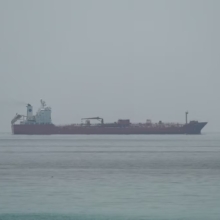
According to vessel-tracking data from Kpler, only six tankers passed through the Strait of Hormuz on Sunday, carrying Iranian crude and Kuwaiti petroleum products — the lowest number in the past five weeks.
These developments have cast serious doubt on the future of the temporary agreement signed last month between the U.S. and Iran, which aimed to reopen the Strait of Hormuz and end the war after more than sixty days of negotiations.
U.S. President Donald Trump stated that the United States would likely take control of the strait and should receive compensation for doing so. In response, Iran’s top military command emphasized that it would not allow Washington to interfere in the management of the strait and warned that any unauthorized passage by the U.S. would face a severe response.
Goldman Sachs has forecast that expanded pipeline capacity in the Middle East could protect more than sixty percent of pre-war Persian Gulf oil exports from potential Strait of Hormuz disruptions by the end of 2028. Under the bank’s base-case scenario, bypass pipeline capacity around Hormuz will rise by about 3.8 million barrels per day by the end of 2027 and cumulatively by 7.3 million barrels per day by the end of 2028, bringing effective bypass capacity to over 14 million barrels per day.
Iran’s floating oil storage has been increasing following higher exports during the temporary peace agreement with the United States, but sales are proceeding slowly as independent Chinese refineries have shifted toward cheaper crude from Iraq, the UAE, and Qatar.
Abu Dhabi National Oil Company announced its official selling price for the Murban grade in August at $80.01 per barrel, down $21.47 from the previous month.
In a separate development, Ukraine’s security service reported that it struck an oil depot in Russia’s Stavropol region overnight, along with three storage tanks at the Kavkaz port in the Krasnodar region.
The Iran-backed Houthi movement, which controls northern Yemen, accused Saudi Arabia of carrying out airstrikes on Sanaa International Airport and vowed to respond.