The United States and India have held productive trade talks, and Indian refiners are already cutting Russian oil imports by 50%, a White House official told Reuters on Thursday.
Brent crude futures rose 56 cents, or 0.9 percent, to $62.47 a barrel. U.S. West Texas Intermediate (WTI) futures rose 58 cents, or 1 percent, to $58.85.
President Donald Trump has said Indian Prime Minister Narendra Modi has agreed to stop buying Russian oil, as the US seeks to put economic pressure on the Kremlin as part of efforts to end the war in Ukraine.
The South Pars Gas Complex (SPGC) has taken a major step toward industrial self-reliance, with more than 90 percent of equipment and supplies for its refineries now sourced domestically, according to the company’s commercial director.
Iran's oil minister's deputy predicts Pars pipeline project will reduce road tanker dependence and save billions in fuel transportation costs, citing favorable performance in refining and fuel distribution.
The CEO of the National Iranian Oil Company (NIOC) emphasized the importance of the Ahvaz oil field as the country’s largest, saying the new project marks a significant move toward increasing the recovery factor and advancing national oil industry policies aimed at implementing enhanced oil recovery (EOR) methods.
Brent crude futures fell 21 cents, or 0.3 percent, to $62.18 a barrel, while U.S. West Texas Intermediate crude futures fell 13 cents, or 0.2 percent, to $58.57 a barrel.
India's foreign ministry announced the launch of an Indian-backed oil refinery in Mongolia, funded by a $1.7 billion line of credit, with a daily crude oil processing capacity.
Iran’s minister of economic affairs and finance emphasized the expansion of brotherly relations and economic, commercial, and infrastructure cooperation between Iran and Tajikistan and proposed special opportunities for deepening these relations under the current conditions.
The Khangiran Gas Refinery in northeastern Iran maintained uninterrupted and above-target gas production during the four cold months of 1403, marking the most stable performance among the country’s gas refineries, according to the plant’s operations chief.
A contract has been signed to construct the Pars Oil Products Pipeline (Mehraaran–Fasa–Shiraz) with a transfer capacity of 73,000 barrels per day and an investment value of €150 million.
India and the U.S. are resuming trade talks this week, with New Delhi committing to increase U.S. energy and gas imports to address concerns over its Russian oil purchases, aiming for a deal to double bilateral trade to $500 billion by 2030.
Iran and Switzerland’s private sectors are calling for stronger collaboration in non-sanctioned industries, emphasizing the key role of private enterprises in shaping future economic ties between the two countries.
The executive decree on land use planning for the petrochemical industry has been officially communicated to petrochemical holding companies and firms, according to the National Petrochemical Company (NPC).
The Pazan field has been identified as Iran’s largest onshore gas reservoir in terms of both gas-in-place and recoverable reserves, according to Mohyeddin Jafari, director of exploration at the National Iranian Oil Company (NIOC).
Brent crude futures rose $1.08, or 1.7 percent, to $63.81 a barrel. U.S. West Texas Intermediate crude rose $1.13, or 1.92 percent, to $60.03 a barrel.
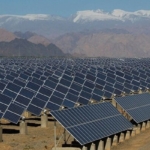
The Executive Secretary of Iran's 7th Solar Power Plants Conference stated that the development of solar power plants has accelerated and this trend will continue for the coming years. He predicted that the trend of interest in developing solar power plants will continue to accelerate over the next four years.
The managing director of Abadan Oil Refining Company announced that efforts are underway to complete the remaining sections of Phase 2 and launch Phase 4 of the Abadan refinery to enhance the quality of refined products.