has signed an agreement with private investors to develop solar power plants by the summer of 2025, aiming to address the country’s electricity supply imbalance.
IRAN Feed Atom
Since the summer of 2020, the National Iranian Oil Company (NIOC) has injected more than 2 billion kilowatt-hours of electricity generated by the West Karoun Power Plant into the national grid to help meet the country's electricity demand.
The spokesperson for the National Iranian Gas Company (NIGC) announced that 870 million cubic meters (mcm) of natural gas were produced on Friday.
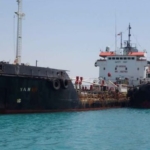
The CEO of Iran Oil Terminals Company emphasized the crucial role of the company in receiving, storing, and exporting oil and gas condensates.
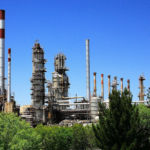
The deputy oil minister announced the launch of a sulfur recovery unit at the South Pars Refinery 14, stating that sulfur extraction began on Wednesday.
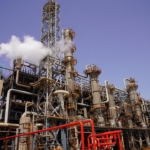
The CEO of the National Petrochemical Industries Company announced that 12 petrochemical projects, valued at $10 billion, are currently being implemented in Kangan.
Production lines 3,000 and 4,000 of the ABS unit at Padjam Polymer Development Company were inaugurated via video conference under the directive of President Masoud Pezeshkian.
The CEO of the National Iranian Petrochemical Company (NPC) announced that 28 petrochemical projects are currently underway in the Asaluyeh and Kangan regions.
According to the latest monthly report from OPEC, Iran’s heavy crude oil prices rose significantly in January, increasing by $6.65, or 9.1%, compared to December, 2024.
The deputy of Iran oil minister emphasized that continuous monitoring and accurate reporting on the petrochemical market’s conditions help stabilize the market.
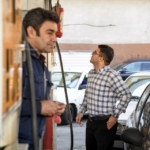
Iran is diversifying its fuel portfolio through the inauguration of 12 CNG stations, promotion of bioethanol use, and a system to convert gasoline-powered vehicles to dual-fuel models.
The CEO of NIOPDC confirmed that the gasoline quota for Nowruz holidays will remain unchanged, stating that adequate reserves have been secured.
Iran’s Deputy Oil Minister and head of the National Petrochemical Company (NPC) announced the implementation of the country’s largest flare gas recovery project with the support of petrochemical companies.
The president of Iran and the national leader of Turkmenistan stressed the importance of expanding gas cooperation and strengthening peace and trust in the region.
The deputy minister of oil stressed the significance of enhancing energy consumption, promoting societal cooperation, and modifying consumer behavior to ensure stable feedstock supply for industries.
The CEO of Pars Oil and Gas Company (POGC) highlighted the significant role of South Pars in Iran’s economy and national security, stating that the field contributes $100 billion annually to the country’s gross domestic product (GDP).
Iran's Oil Minister Mohsen Paknejad dismissed the US policy of exerting maximum pressure to curb Iran's oil exports as a failed strategy, emphasizing that reducing the Islamic Republic's oil exports to zero is an unattainable goal.
The National Iranian Oil Company (NIOC) is implementing significant plans for the development of oil and gas fields, prioritizing these projects as key components of its developmental strategy.
Iran’s petrochemical industry has made significant strides over the past four decades, not only surpassing domestic needs but also becoming one of the country’s most vital sources of foreign currency. The industry now generates an annual revenue exceeding $23 billion.
Shastan Commercial Investment Company's CEO has resolved financial issues for incomplete petrochemical projects, including Bushehr Petrochemical, Negin Makran Petrochemical Development Company, Badr Shargh Petrochemical Complex, and Negin Bandar Abbas Petro Refinery.