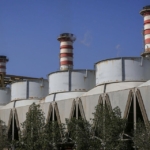
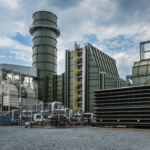
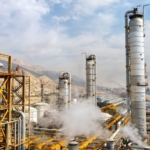
The CEO of the National Iranian Gas Company (NIGC) said that between 95% and 98% of Iran’s population has access to natural gas, adding that a significant portion of the country’s gas is used to fuel power plants during the summer.
Power plants in Iran consumed more than 2 billion cubic meters of natural gas last week, accounting for the largest share of the country’s total gas usage across three main sectors: power generation, major industries, and residential-commercial-minor industries.
Minister of Petroleum and Natural Gas Hardeep Singh Puri said on Monday that the government is looking at various projects in Norway with an eye on expertise to upgrade and expand India’s energy capabilities.
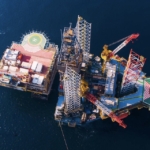
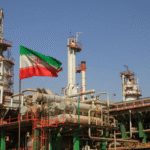
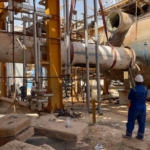
The CEO of Pars Oil and Gas Company (POGC) stated that during the 12-day war, South Pars platforms continued operations uninterrupted. Alongside maintaining stable gas extraction, major overhauls proceeded as planned, with 11 platforms successfully completed so far.
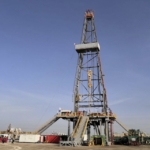
NIDC's CEO prioritizes localizing key equipment and increasing domestically manufactured components in drilling projects, resulting in $7 million savings from the construction of its third domestically built rig.
The deputy governor of the Central Bank of Iran (CBI) for monetary policy said the banking network supports the capital market and shareholders through the stock market management, and the use of monetary and credit policy tools.
Referring to the government's policy of developing solar power plants in the country, the director of the engineering office of the Iranian Water and Power Resources Development Management Company said: "Based on this, the construction of solar power plants next to dams has been put on the agenda."
Iran has boosted its oil production to a near-record 5.1 million barrels per day in 2024, defying U.S. sanctions and Israeli aggression, with domestic companies and the IRGC driving the surge, according to a Bloomberg report citing the UK Energy Institute.
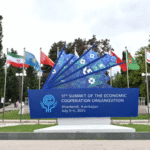
The latest summit of the Economic Cooperation Organization (ECO), held in Khankandi, Azerbaijan, brought renewed attention to the untapped economic potential of the region.
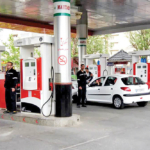
A member of the Iranian Parliament's Energy Committee praised the Oil Ministry and NIORC for their timely and effective measures in meeting public gasoline needs.
The Trump administration imposed new sanctions targeting Iran’s oil trade on Thursday as part of its maximum pressure campaign, the US Treasury Department announced.
spokesperson for Iran’s Union of Exporters of Oil, Gas, and Petrochemical Products stated that the oil market is simultaneously influenced by fundamental factors, countries’ economic conditions, and political developments.
Iranian energy minister announced that next week, three new packages, one conventional and two more technical models, will be unveiled for the construction of household solar power plants.
Oil Minister Mohsen Paknejad said Wednesday that Iran’s oil exports are continuing unchanged in volume and terms, adding, “At present, we have no concerns in this regard.”
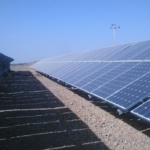
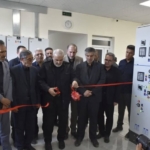
Iran's Energy Minister, Abbas Aliabadi, launched 316 megawatts of solar capacity across 40 sites, praising local efforts in Mahallat County for driving renewable transition and reaffirming government support for solar investment.
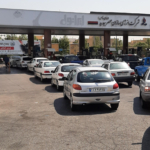
During the 12-day war between Iran and Israel, Iran experienced a 50% increase in gasoline consumption, posing logistical challenges for fuel distribution, but fuel supply remained uninterrupted.
Iran's first vice president reported that gasoline consumption exceeded production by 80 million liters on the first day of the 12-day war, but the economic situation was effectively managed.
A member of the Iranian Parliament’s Energy Committee described the oil industry’s performance during the 12-day war with the Zionist regime as a prime example of infrastructure resilience, centralized command and organizational cohesion.
The CEO of National Iranian Petrochemical Company (NPC) emphasized that cooperation among petrochemical holdings and companies, along with the implementation of NPC’s approved programs during the 12-day imposed war, helped achieve planned objectives in emergency management.
The CEO of Iran’s Offshore Oil Company announced the return of the Salman field’s water injection system to service, stating that with the startup of the gas injection compressor turbine by the end of the first half of this year, oil production from the shared Salman field will increase, and flared gas will also be reduced.