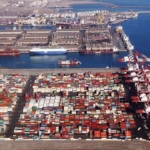
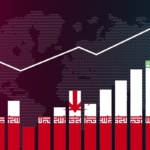
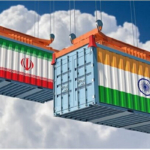
Iran has posted a trade deficit of just over $1 billion in four months of current Iranian calendar year (started March 21, 2025), registering a 10% drop in value terms over the same period last year, IRICA announced.
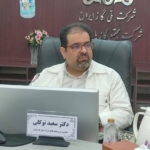
Saeed Tavakoli, Managing Director of the National Iranian Gas Company, highlighted the urgent need to develop renewable energy sources to reduce gas consumption in power plants and prevent air pollution caused by burning fuel oil during energy imbalances. He called on the Ministry of Energy to implement new mechanisms to enhance alternative fuel use and protect the environment.
Iran has managed to significantly increase its oil production in a short period of time under an emergency plan introduced by the government and despite the pressures of the US sanctions, according to a report published in the local media.
The International Monetary Fund (IMF) has doubled its forecast for Iran's economic growth in 2025 to 0.6 percent, up from 0.3 percent in its previous report, despite the economic and geopolitical fallout from a 12-day war between Iran and Israel earlier this year.
The Iranian Parliament's Energy Committee's Energy Committee head praised the Oil and Gas Investment Fund's crucial role in restoring infrastructure damaged during the 12-day conflict.
Iran's National Petrochemical Company's project director has announced 19 operational petrochemical projects, including 15 production and four feedstock supply projects, set to commence by March 2026.
The Ministry of Oil's deputy highlighted the crucial role of the private sector in advancing the oil industry's objectives, emphasizing the country's reliance on oil.
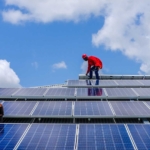
Iran’s Supreme Economic Council has approved a $3.2 billion investment from the National Development Fund (NDF) to support the construction of 7,000 megawatts of solar power capacity, with a focus on rooftop units, officials said on Monday.
The South Azadegan oil field drilling project, completed through collaboration with NIDC and PEDEC, has been handed over to the employer for operation.
The CEO of Pars Oil and Gas Company announced the commissioning of the third well ring in the infill drilling project at the South Pars gas field, stating that daily gas extraction capacity has increased by 1.6 million cubic meters.
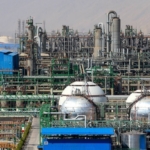
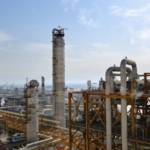
The overhaul of Phase 10 of the South Pars Gas Refinery has been successfully completed, marking a major step toward improving operational efficiency and process stability, according to the plant’s director.
Iran’s oil minister emphasized the continuation of the country’s oil exports, stating that the Ministry of Petroleum has necessary plans in place to address sanctions and the potential activation of the "snapback" mechanism.
Iran exported petrochemical products valued at $4.684 billion during the first quarter of the current Iranian calendar year (March 21-June 21), the head of the Islamic Republic of Iran Customs Administration (IRICA) announced.
In 2024, Iran had the highest oil revenue growth in OPEC at nearly 14%, while overall OPEC oil export earnings fell by 4%, largely due to revenue drops in Saudi Arabia and Kuwait.
Mohammad Sadegh Azimifar, CEO of the National Iranian Oil Refining and Distribution Company, announced non-price measures to manage fuel consumption and improve efficiency through financing.
Iran's deputy oil minister emphasizes balanced development, value chain completion, and crisis preparedness in Asaluyeh's petrochemical sector, the country's main energy hub on the Persian Gulf coast.
The National Iranian Gas Company (NIGC) has launched its first smart gas network project in Khorasan Razavi Province, deploying 22 sensors across 114 critical locations for real-time monitoring and intelligent infrastructure management.
Iran has officially launched a nationwide project to replace millions of outdated gas heaters with high-efficiency models, aiming to optimize natural gas consumption and redirect saved resources toward industrial use, officials said.
The Persian Gulf Star Refinery now supplies 20% of Iran’s total fuel basket and 40% of the country’s gasoline consumption, according to the company’s new CEO, Vahid Ghanei.