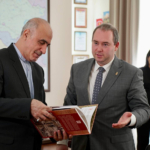
Iran and Russia’s Astrakhan region are strengthening cooperation in trade, industry, energy and logistics as part of efforts to enhance connectivity along the International North–South Transit Corridor (INSTC), Iran’s Consul General in Astrakhan said.
IRAN Feed Atom
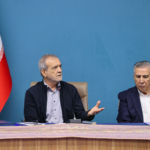
Iran’s President Masoud Pezeshkian on Monday criticized the misuse of diesel fuel quotas, saying some individuals receive fuel allocations but do not operate their vehicles, instead selling their quotas.
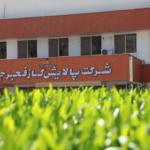
The acting head of Fajr Jam Gas Refining Company announced higher production of gas condensate and liquefied petroleum gas (LPG) during the first half of this year.
The director of exploration at the National Iranian Oil Company (NIOC) has released new details about recently discovered reserves in the Paznan field, announcing the identification of two new reservoir layers — a gas reservoir estimated at 10 trillion cubic feet and an oil reservoir with recoverable reserves of 200 million barrels.
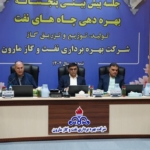
The managing director of the National Iranian South Oilfields Company (NISOC) emphasized the importance of ongoing evaluations of recoverable oil and gas reserves to enable more precise planning and help achieve the goals of Iran’s Seventh Development Plan.
Iran’s oil minister announced the discovery of significant new gas and oil reserves in the Pazan field, located in the southern part of Fars Province, saying the find could help offset the country’s future energy imbalance.
South Pars Gas Complex has set a new record in ethane production, with output reaching more than 2.15 million metric tons in the first half of 1404, according to the company’s managing director.
Senior officials from Iran and Norway discussed enhancing collaboration in renewable energy and electricity grid management during a meeting involving Norway's ambassador to Tehran and the head of Iran's Renewable Energy and Energy Efficiency Organization (SATBA).
The development of Iran’s independent North Pars gas field has officially begun following the signing of a contract for the construction of the jacket for the field’s first phase, according to the project manager.
The Iranian Oil Ministry successfully managed the country’s gas supply to power plants during peak summer demand in 1404 and is now preparing to ensure a stable energy supply for the upcoming winter through refinery overhauls, expanded gas storage injections, and increased liquid fuel reserves.
Iran plans to operationalize 948 kilometers of gas transmission pipelines and three new compressor stations this Iranian calendar year, while also expanding the Sarajeh gas storage facility, according to the head of the Iranian Gas Engineering and Development Company.
Gas injections into Iran's underground storage facilities have increased by 13 percent compared to last year to ensure a stable gas supply throughout the winter.
The Iran oil minister and his deputies convened a meeting Saturday, Oct. 4, to review the latest measures ensuring stable fuel supply across the country ahead of the cold season.
The governor of Central Bank of Iran (CBI) said solar energy projects will receive immediate financing, underlining the sector’s priority for the government.
Iran’s high dependence on natural gas has made the industry particularly sensitive, the head of the National Iranian Gas Company said Thursday.
Technologists from an Iranian industrial company used nanotechnology to significantly decrease flammability in the urban, rural and agricultural water transmission lines.
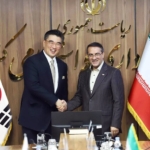
Iran’s Vice President and Head of the country’s Administrative and Employment Organization, in a meeting with the South Korean Ambassador to Tehran Kim Junpyo, emphasized the 14th administration's determination to develop administrative and technological cooperation with South Korea, naming government smartization and the use of artificial intelligence as key areas of this cooperation.
The international tanker market views the activation of the so-called “snapback” mechanism by three European countries, under US pressure, as having no significant effect beyond existing American sanctions, according to Lloyd’s List.
Iran supplied 50.2 billion cubic meters of natural gas to power plants in the first half of the irannian year 1404, marking a 2 billion cubic meter increase compared with the same period last year, the Oil Ministry announced.
Iran's oil minister outlined measures taken to ensure winter fuel supply this year, stating that actions have been implemented to increase raw gas production which will contribute to the amount of gas delivered to the national grid.