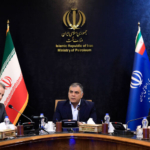
Iran’s Oil Minister Mohsen Paknejad said the country will gradually reduce gas flaring by about 295 million cubic feet per day (mcf/d) by the end of the Iranian calendar year 1405 (March 2027), following the signing of 12 new contracts on Saturday.
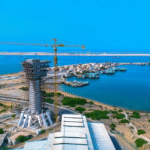
India has confirmed that the United States will not impose its sanctions on the Chabahar Port in Iran for the next six months, allowing New Delhi to continue its investment and operations at the strategic facility uninterrupted.
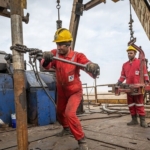
Hamidreza Shafiei Makvandi, deputy managing director of the National Iranian Drilling Company, announced the drilling and completion of 72 oil and gas wells in the first seven months of the current Iranian calendar year.
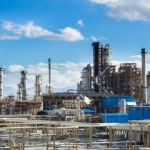
The Imam Khomeini Oil Refinery in Shazand has completed a $60 million overhaul, increasing production capacity by 30% and improving operational reliability, ensuring high-quality production for four years.
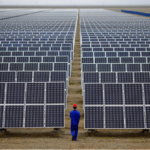
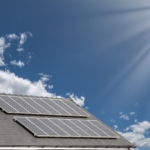
Iran's renewable energy capacity surpasses 2,700 megawatts, requiring stronger facilitation by distribution companies to maintain growth, especially in small-scale solar systems, according to Mohsen Tarztalab.
The managing director of the National Iranian Gas Company emphasized the importance of protecting and maintaining the stability of the country’s gas network, saying that infrastructure resilience and social stability are two key elements of passive defense.
Oil Minister Mohsen Paknejad said gas delivery to the network has increased by about 6.7 million cubic meters per day and diesel reserves at power plants have risen 130%, putting Iran in a strong position heading into winter.
The head of the Iran-Iraq Joint Chamber of Commerce, Industries, Mines, and Agriculture said that $128 million worth of technical and engineering services were exported to Iraq in the first six months of the current Iranian calendar year (March 21-September 22), which is not an appropriate figure.
The managing director of the National Iranian Oil Products Distribution Company said power plant fuel tanks across the country are full, leaving little capacity for additional storage.
Iran’s Oil Minister Mohsen Paknejad said the oil industry is the main pillar of Iran’s economic resilience and plays a leading role in overcoming the country’s challenges.
Iran’s National Petrochemical Company (NPC) announced that projects included in the country’s Seventh National Development Plan have achieved an average progress rate of 60 percent, with an estimated total investment requirement of around $26 billion.
The National Petrochemical Company’s managing director said the industry is focusing on attracting investment from genuine private sector players, noting that only about 15% of the $92 billion invested in Iran’s petrochemical sector so far has come from real private investors.
The investment and business development director of the National Iranian Oil Company (NIOC) warned that without reforms in policymaking and financing, a significant portion of the country’s underground oil and gas resources may never be extracted.
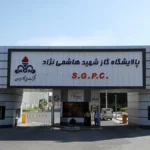
The managing director of Hasheminejad Gas Refinery announced that the facility processed more than 6 billion cubic meters of natural gas during the first six months of this year.
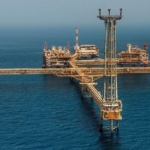
Iran’s South Pars gas platforms have completed a comprehensive overhaul program and are now fully prepared to maximize gas production during the cold season, the managing director of the Pars Oil and Gas Company (POGC) said.
The acting head of Fajr Jam Gas Refining Company said the volume of gas sent to flares has dropped by more than 71% since the Iranian year 1398 (2019), helping to reduce greenhouse gas emissions.
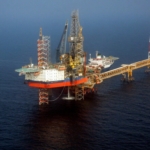
The deputy director of operations and support at Pars Oil and Gas Company announced the successful completion of major overhauls on offshore platforms in the shared South Pars field, saying all platforms have now returned to production.
Iran’s gas industry will require about $42 billion in investment by the end of the Seventh Development Plan, a senior official said, emphasizing that the sector seeks not only financial input but also innovation, management expertise, and stronger international connections.
The head of the National Iranian Oil Products Refining and Distribution Company said simultaneous efforts to boost production and manage consumption have increased diesel output by 7 million liters, leading to higher fuel reserves for power plants.
The Iranian Vice-Presidency for Science, Technology and Knowledge-Based Economy launched the development of small-scale solar power plants in 22 ministries by using the solar panels manufactured by the country’s knowledge-based companies.