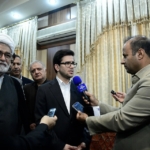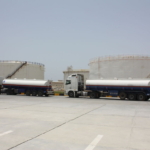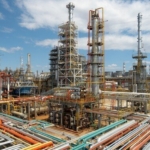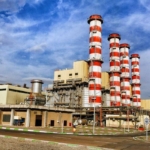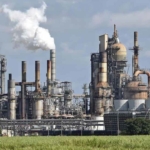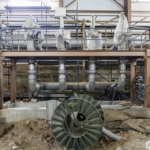
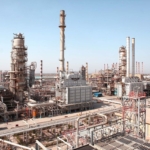
The CEO of Isfahan Oil Refining Co. said Thursday that the refinery has completed a project to upgrade kerosene from Euro-2 to Euro-5 standards, adding that the current unit has a daily capacity of 19,000 barrels with potential for expansion.
FUEL Feed Atom
National Iranian Oil Refining and Distribution Company (NIORDC) has launched a major digital transformation program to modernize its supply chain, with all domestic oil tankers set to be equipped with real-time monitoring systems within two years, a senior official said.
The CEO of the National Iranian Oil Refining and Distribution Company (NIORDC) emphasized the necessity of securing financial resources and comprehensive inter-agency cooperation to sustain the refining industry's development.
Iran plans to raise its refining capacity by 180,000 barrels per day (bpd) by the end of the current Iranian year in March 2026 and bring three major fuel quality projects online, the head of the National Iranian Oil Refining and Distribution Company (NIORDC) said.
Iran supplied more than 22 billion liters of liquid fuel to power plants in the Iranian year 1403 (March 2024–March 2025), a 40 percent increase from the previous year, the Oil Ministry said.
The National Iranian Oil Refining and Distribution Company (NIORDC) is conducting extensive maintenance at 10 refineries across the country to ensure a stable and secure supply of fuel, a senior company official announced.
Iran’s daily gasoline distribution grew nearly 7% this year (started March 21), reaching a record of more than 200 million liters in a single day, according to the head of the National Iranian Oil Products Distribution Co.
Iran is set to begin importing premium gasoline to meet the needs of certain vehicles and balance supply and distribution in the domestic fuel network, the Oil Ministry announced.
Iran has begun registering privately owned gasoline vehicles, model year 2018 and newer, for free conversion to dual-fuel systems, the head of the National Iranian Oil Products Distribution Co. announced.
State-owned Indian Oil Corporation Ltd has signed a Memorandum of Understanding (MoU) with Air India for the supply of Sustainable Aviation Fuel (SAF) for remarkable green future of aviation fuel strategy.
Oil Minister Mohsen Paknejad said Saturday that premium or special-grade gasoline is being introduced as a new service by the Oil Ministry and is not linked to fuel quotas.
Tehran Oil Refining Company has launched its first phase of wastewater treatment project, replacing 15,000 to 20,000 cubic meters of municipal water with treated water, providing sustainable water supply for ancillary industries.
The head of Iran’s Oil Refining Industry Employers Association said excessive consumption, fuel smuggling and weaknesses in the domestic auto industry are the main causes of the country’s gasoline supply imbalance.
National Iranian Oil Products Distribution Co. deploys 18 mobile fuel stations at border terminals and parking lots for Arbaeen pilgrimage, citing increased fuel consumption in border provinces.
India's exports of refined fuel are in the spotlight after last month's European Union sanctions while U.S. President Donald Trump has threatened a tariff hike over its oil purchases from Russia.
Mohammad Sadegh Azimifar, CEO of the National Iranian Oil Refining and Distribution Company, announced non-price measures to manage fuel consumption and improve efficiency through financing.
The Persian Gulf Star Refinery now supplies 20% of Iran’s total fuel basket and 40% of the country’s gasoline consumption, according to the company’s new CEO, Vahid Ghanei.
Iran has reduced its daily diesel consumption by an average of five million liters in 2025, compared to the previous year, driven by tighter consumption management and enhanced fuel smuggling controls, a senior oil official said.
Power plants accounted for nearly half of the nation's total natural gas consumption in the week ending July 18, using over 2.024 billion cubic meters, with stable demand from power plants and fluctuating residential usage.
The deputy CEO of the National Iranian Oil Products Distribution Company (NIOPDC) emphasized the necessity of interagency cooperation to prevent off-network fuel distribution and the importance of using personal fuel cards.