India’s Natural Gas Consumption Falls 4.6% in April-October FY26 as Power Sector Demand Weakens
RoydadNaft – India’s natural gas consumption averaged approximately 190 million metric standard cubic meters per day (mmscmd) from April to October in fiscal year 2026, marking a 4.6% decline from about 200 mmscmd in the same period the previous year. The slowdown was primarily attributed to lower demand from the power sector, maintenance shutdowns at refineries and fertilizer plants, and fluctuations in liquefied natural gas (LNG) prices, according to Crisil Intelligence.
The dip was particularly sharp during the summer months, following an early onset of the southwest monsoon that reduced cooling needs. This stood in contrast to the prior year’s summer, when consumption climbed to around 203 mmscmd due to government policies promoting gas-based power generation. Spot LNG prices averaged about $13 per million British thermal units (MMBtu), a 34% year-on-year increase, which made gas-fired power less competitive and constrained additional demand, the report stated.
Consumption stabilized during the monsoon season, rising 1.2% from summer lows to roughly 191 mmscmd. This recovery was supported by a nearly 9% drop in spot LNG prices and the restart of refinery and fertilizer operations. Government measures to prevent fertilizer plant closures also helped maintain baseline demand, even as power sector uptake remained subdued.
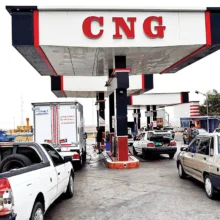
Despite the overall moderation, the city gas distribution (CGD) segment bucked the trend, with consumption growing 8.8% year-to-date to about 44 mmscmd. This boosted CGD’s share of total gas demand to around 23% from 20% a year earlier. Growth was fueled by network expansion, reaching 8,477 compressed natural gas (CNG) stations and 15.9 million domestic piped natural gas (PNG) connections by October, including additions of 361 stations and 0.9 million connections. Over the past five fiscal years, new CNG infrastructure has increasingly shifted to non-metro and Tier 2/3 cities, reducing geographic concentration.
On the supply side, shifts in gas allocation did not significantly impact volumes. The share of cheaper administered price mechanism (APM) gas for CGD entities fell to 35-40% from 55-65% last year, increasing reliance on new-well gas, high-pressure high-temperature (HPHT) gas, and re-gasified LNG. This raised import dependence to about 36% in April-October, up from 32% previously. Careful retail price adjustments minimized the effect on volumes, Crisil noted.
Looking ahead, a new two-zone pipeline tariff framework set by the petroleum regulator—effective January 1, 2026—will impose a uniform rate of ₹54 per MMBtu for priority CGD segments, regardless of distance. This is expected to cut transportation costs by about 50% for remote markets compared to previous distance-based tariffs, enhancing affordability and supporting future volume growth.
In the near term, overall gas demand is projected to remain stable, with the CGD sector providing a buffer against declining LNG prices, according to Crisil Intelligence.