Asia Sees Decline in U.S. Energy Imports in 2025 Despite Trump’s Trade Push
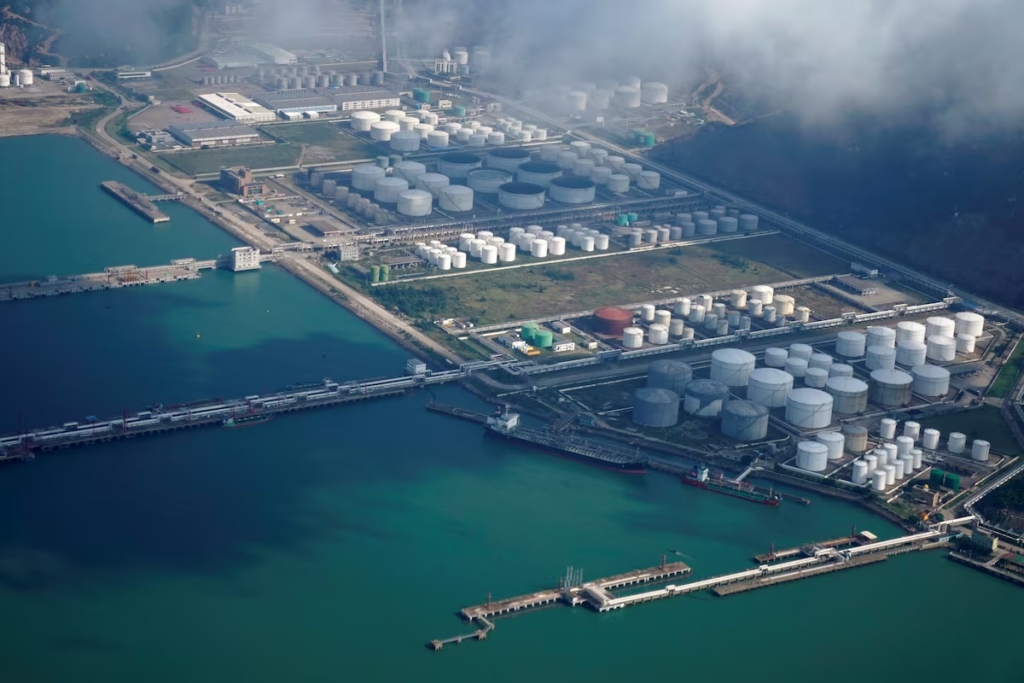
RoydadNaft – Asia’s purchases of U.S. crude oil, liquefied natural gas (LNG), and coal are set to fall this year, defying President Donald Trump’s aggressive use of tariffs and trade deals to ramp up American energy exports.
The downturn is primarily led by China, the world’s top commodity importer, which sharply curtailed buys after Trump escalated tariffs on Chinese goods to an average of around 47.5%.
According to data from commodity trackers Kpler, Asia’s U.S. crude oil imports are projected at 1.43 million barrels per day (bpd) in 2025, down from 1.56 million bpd in 2024 and a peak of 1.65 million bpd in 2023.
South Korea, the region’s largest buyer and a nation that pledged greater U.S. energy purchases under a Trump-era trade agreement, is expected to see only a marginal rise to 470,000 bpd from 465,000 bpd last year.
Japan, another country committed to increasing U.S. energy imports, did post a notable gain in crude, rising to 84,500 bpd in 2025 from just 34,000 bpd in 2024. However, this represents a mere 3.8% of Japan’s total crude imports of about 2.25 million bpd.
China’s intake plummeted to 38,350 bpd—a staggering 84% drop from 245,100 bpd in 2024 and 400,000 bpd in 2023.
The pattern repeats with LNG: China’s U.S. imports crashed to 250,000 tons in 2025, down 94% from 4.30 million tons the prior year. Overall Asian LNG purchases from the U.S.—the global leader in exports—fell to 19.08 million tons from 29.78 million tons in 2024.
Japan remained the top regional buyer but saw volumes slip to 4.49 million tons from 6.50 million tons.
India also slashed U.S. LNG imports to 2.93 million tons from 5.01 million tons, amid tensions over New Delhi’s continued Russian crude buys, which prompted Trump to slap tariffs of up to 50% on Indian goods.
Yet India bucked the trend on coal, boosting U.S. imports to 21.07 million tons from 18.77 million tons, claiming a dominant 61% share of Asia’s total. This leaves U.S. coal exports exposed if bilateral disputes worsen in 2026.
Other key buyers like Japan (up slightly to 4.44 million tons) and South Korea (to 1.59 million tons) showed only modest gains.
Japan’s September deal committed to $7 billion in annual U.S. energy purchases, but 2025 figures—valued at roughly $5.32 billion based on average prices—suggest a sharp ramp-up will be needed next year. With Japan’s energy demand stagnant, this would likely come at the expense of other suppliers.
This highlights a core challenge for Trump’s tariff-driven strategy: U.S. production capacity may prove insufficient if all pledged buyers—from Asia to the EU’s ambitious $250 billion annual target—fully honor their commitments.