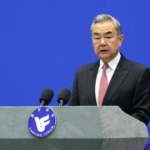
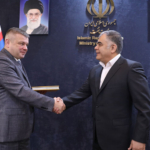
Chinese Foreign Minister Wang Yi and UAE Foreign Minister Sheikh Abdullah bin Zayed Al Nahyan met in Abu Dhabi to pledge deeper cooperation in investment, energy, and infrastructure.
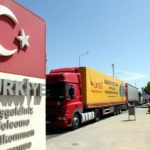
The Turkish Statistical Institute announced that the value of this country’s imports from Iran in the first ten months of 2025 increased by four percent compared to the same period last year, reaching $2.035 billion.
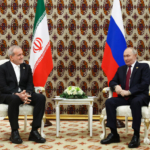
President Masoud Pezeshkian reaffirmed Tehran’s commitment to implementing a comprehensive strategic cooperation agreement with Russia, saying Iran is determined to put the signed accord into effect and expects Moscow to expedite and finalize its part of the process.
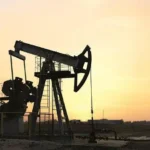
The International Energy Agency has lowered its 2026 global oil surplus forecast to 3.84 million barrels per day, citing stronger demand and reduced supply from Russia and Venezuela due to sanctions.
India has unleashed the ORD Act of 2025, a sweeping deregulation drive to cut red tape, attract global investors, and turbocharge upstream oil and gas exploration in one of the world’s fastest-growing energy markets.
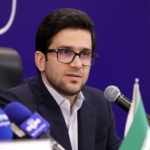
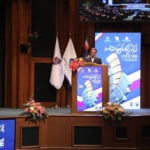
Iran launched its first SME 100 ranking, a joint IMO–ISIPO initiative to identify top-performing small and medium enterprises through structured evaluation.
Iran’s oil minister said the country offers “golden opportunities” for investment, especially in the oil and gas sector, and announced that a package of contracts has been prepared for cooperation with friendly nations.
India and Nepal are accelerating their economic integration with a series of high-impact projects and policy reforms that span trade facilitation, clean energy, digital payments and cross-border infrastructure, Nepali and Indian sources reported on Sunday.
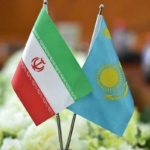
Hamed Asgari of ICCIMA emphasized that Iran’s private sector is prepared to lead in boosting economic ties with Kazakhstan during the president’s trade delegation visit.
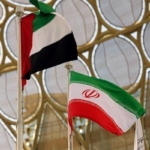
Iran’s transport minister highlighted that commercial relations with the UAE could grow significantly, given the two countries’ strong historical, geographic, and cultural ties.
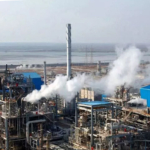
Shahid Tondgooyan Petrochemical Company saved over 1 trillion rials annually by reusing low‑pressure steam, cutting steam use 25%, water 360,000 m³, and electricity 6,500 MWh.
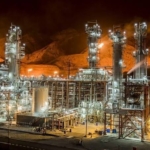
Babak Poladi-Borj, Head of Research and Technology at Iran’s South Pars Gas Complex, stated that AI will drive South Pars into a new era of digitalized operations, enhancing monitoring, energy management, and real-time analytics.
Over 92% of Iran’s electricity still comes from fossil fuels, prompting government efforts to boost renewable energy and address its persistent energy imbalance.
Iranian Oil Minister Mohsen Paknejad stated that the formation of a “Supreme Energy Council” is under consideration to improve coordination among various energy sectors in the country.
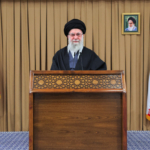
Ayatollah Ali Khamenei, in a televised speech, condemned widespread waste of fuel and food as a grave economic problem, stressing that eliminating it would greatly improve Iran’s situation and calling for public unity behind the government.
Indian banks are cautiously reentering Russian crude financing, backing only sanctions-compliant trades with non-blacklisted sellers, vessels, and payment systems, according to Bloomberg.
Petrochemical Pardis Company and Pars Special Economic Energy Zone Organization signed an MoU to boost Iran’s urea exports by securing 30,000 tons of storage and a dedicated dock for direct shipments.
Iran’s Bushehr Province’s industry chief warned that despite hosting South Pars and many petrochemical plants, the region gains little economic benefit, urging a rapid focus on downstream development and retaining financial resources locally.