
US renews sanctions waiver releasing $10 billion to Iran
RoydadNaft – The US renewed the waiver to allow Iraq to pay Iran for electricity, renewing criticism of President Biden from Republican lawmakers
The US Treasury Department has renewed a sanctions waiver which will allow the transfer of $10 billion to Iran for the payment of electricity provided to Iraq, Al-Hurra reported on 16 November.
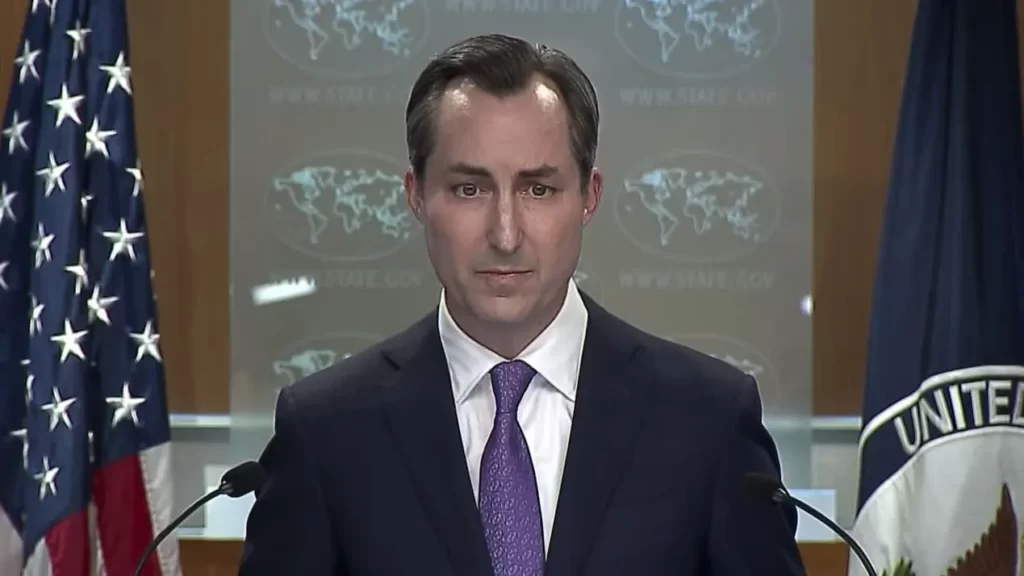
US State Department spokesman Matthew Miller said the waiver was renewed on Tuesday, the same day the previous exemption expired.
Iraq relies heavily on natural gas and electricity imports from Iran to meet its needs This summer, Iran cut off electricity to Iraq as a result of non-payment by Iraq. The Treasury blocked Iraq from making the US dollar payments because it seeks to enforce US imposed economic sanctions on Iran.
Two senior US State Department officials announced that Secretary of State Anthony Blinken signed the decision to extend Iraq’s exemption from sanctions imposed on Iran for a period of 120 days.
The two officials explained that this extension is the twenty-first since 2018, and claimed that Iran “can only use funds restricted in Iraqi banks for humanitarian and other non-sanctioned transactions.”
The State Department spokesman was asked during the news conference whether Iran helped prevent Hezbollah from launching a full-scale war on Israel, saying, “I will not talk about the measures taken by Iran, but we sent very clear and strong messages that we believe that no party hostile to Israel should enter into this conflict.”
Miller added: “We sent public messages in this direction, and you saw President Joe Biden talking about it. We also sent private messages in this regard and we hope they will arrive. If they do not arrive, we will be ready to take action.”
Many observers of the region have speculated Hezbollah would use its massive stock of rockets and missiles to target Tel Aviv in response to Israel’s ongoing bombing campaign in Gaza. Israel has killed over 11,200 Palestinians, the majority women and children, in actions many view as constituting genocide.
In September, the US Treasury allowed $6 billion in Iranian oil revenues seized in South Korea to be returned to the Islamic Republic via banks in Qatar as part of a prisoner exchange. Regarding the $6 billion, Miller said, “As I understand it, none of this money has been spent yet.”
The Democrat-held White House was criticized heavily by Republican lawmakers for releasing the funds from South Korea. They claimed that Iran would use the funds for the purpose of “terrorism” against the US and Israel.
President Biden is now facing further criticism from Republicans over the $10 billion as well, in particular given the timing, as fighting now rages between the US-backed Israeli military and Iran-backed Hamas in Gaza. Miller stated in response the White House is not worried about “optics.”
Iranian-backed resistance groups have also carried out 56 attacks against US forces illegally occupying Syria and others stationed in Iraq with the permission of Baghdad.
In response, Republicans are seeking to pressure the White House intensify sanctions against Iran, which the US has imposed for years, allegedly due to Iran’s nuclear program.
Meanwhile, President Biden met with Chinese President Xi Jinping, on the sidelines of the Asia-Pacific Economic Cooperation (APEC) summit held in San Francisco, California, on 15 November.
A senior US official told reporters that US President Joe Biden asked China to use its influence with Iran “to urge it to avoid steps that could be considered provocative in the Middle East.”
The official added that Chinese officials are engaged in discussions with Iran “about the risks in the region.”