
Berlin makes U-turn, backs joint gas purchasing at EU level
Berlin has belatedly committed to an EU platform for joint gas buying ahead of an EU summit on Friday to address the energy crisis. The move follows heavy criticism of Germany’s €200 billion energy “shield”, which exposed the widening gap between rich and poor EU member states.
On 29 September, the German government announced a €200 billion economic “shield”designed to protect consumers and businesses from surging energy bills.
But the heavy spending plan has since been criticised by EU partners, who warned against the disparities it would create among EU countries, with some calling it “cannibalism” at the expense of EU solidarity.
As an olive branch, the government affirmed its commitment to joint gas purchasing – which it previously tacitly rejected – ahead of an informal meeting of EU heads of state in Prague on Friday (7 October).
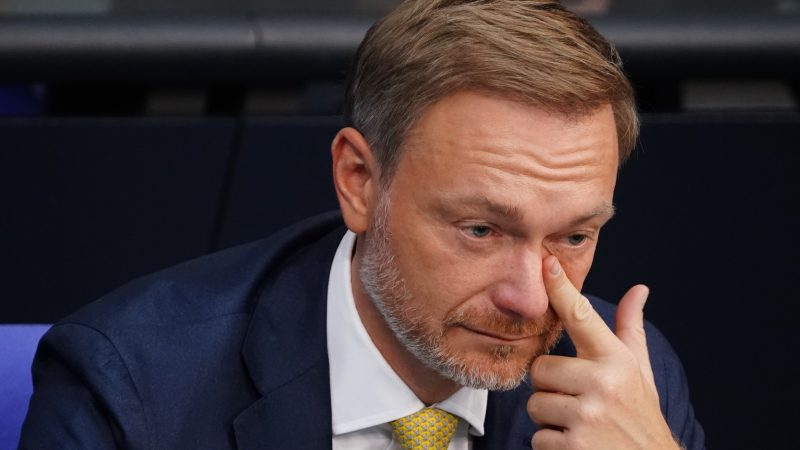
“We must make progress on joint gas purchasing,” said Finance Minister Christian Lindner on Tuesday in Luxembourg while meeting his EU counterparts.
Smaller EU countries have long called for an EU joint gas purchasing programme, a proposal since taken up by the European Commission in response to Russia’s military aggression in Ukraine.
Lindner’s comments support recent statement by Germany’s Vice-Chancellor Robert Habeck. On Friday (30 September), he said Europe must “use [its] market power wisely” as part of a joint purchasing programme for gas.
Berlin has not always been supportive of joint purchasing. The idea was first floated by the European Commission on 8 March and taken up in the conclusions of an EU summit in March.
However, Berlin insisted to keep common gas purchasing on a “voluntary” basis only, arguing the system was not suited to all EU countries. Smaller member states, meanwhile, pushed for joint purchases as a frantic bidding war began, driving up prices on the gas market.
While senior German officials repeated their intention to act in a “cooperative” spirit with EU partners, they were also quick to highlight the need “to remain realistic.”
Joint purchasing alone “will not increase the amount of gas available, which is the main challenge,” a senior German official told journalists in March.
The German government, since then, kept holding to the same line: “we don’t have a state-owned company,” Habeck underline in June. With its liberalised market, Germany could not “order” companies to participate, senior officials argued.
“They are private sector companies that have supply contracts and in order to fulfil these supply contracts for energy they have to buy the basic supply,” one German government official said in March.
Despite calls from smaller EU countries, little progress was made on joint purchases for months.
Instead, Berlin provided ample spare cash to Trading Hub Europe, the German gas market operator composed of gas traders, which went on a gas purchasing spree to fill up the country’s gas stores.
Now, Germany’s gas stores are more than 90% full. And joint gas purchases are back on the agenda for next winter, according to draft EU summit conclusions due to be adopted on Friday.
“We need to keep up our effort and prepare for the next filling season,” reads the draft text, which is still subject to change. “Pooling our demand through the EU Energy Platform will allow making full use of the Union’s collective political and market weight,” it adds.
With Germany ready to support joint gas purchasing at EU level, the proposal now has greater chances of coming to pass.
But as European gas stores are almost entirely full, Berlin’s support may be coming too late.
“The price of gas is skyrocketing. Why? Because of, actually, Germany buying a lot of gas,” liberal Finnish MEP Nils Torvald said in September.