
China isn’t importing any US LNG, but it’s still in the game
RoydadNaft – China hasn’t brought in a single cargo of US liquefied natural gas (LNG) for a full year now, but that doesn’t mean it has completely walked away from the American supply.
This month marks the anniversary of China’s last direct import of US LNG, which took place in February 2025, right in the middle of a fresh escalation in the trade war between the world’s two biggest economies.
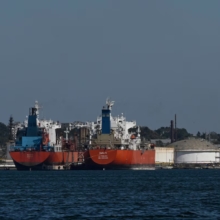
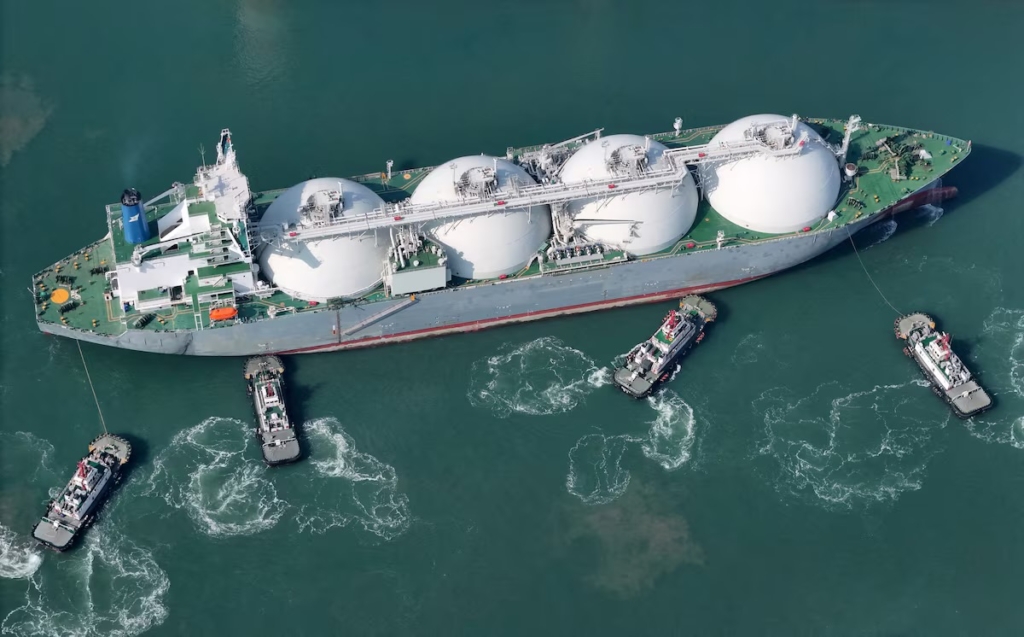
Despite the freeze on direct deliveries to Chinese ports, Chinese companies have carried on buying substantial volumes of US LNG under long-term contracts signed with American producers. Rather than shipping the super-chilled fuel back home, they have routinely redirected those cargoes — most often to Europe, where demand has been very strong in recent years.
The situation neatly illustrates just how closely linked the US and Chinese energy systems still are, even as both Washington and Beijing push to reduce their economic dependence on each other amid broader geopolitical rivalry.
It also shows how much more flexible and liquid the global LNG market has become, thanks in large part to the rapid growth of US export capacity. The United States overtook Qatar to become the world’s biggest LNG exporter in 2023.
Since 2018, major Chinese energy firms — among them PetroChina, CNOOC and Unipec — have signed close to 20 long-term LNG supply agreements with US developers such as Cheniere Energy, Venture Global and NextDecade. Together these contracts commit to around 25 million tonnes a year, with most running for 20 or 25 years and helping underpin the financing of multi-billion-dollar export projects along the US Gulf Coast.
Last year the US shipped out nearly 110 million tonnes of LNG, representing more than a quarter of total global supply. China, still the world’s largest LNG importer overall, took 4.3 million tonnes from the US in 2024 — roughly 5% of America’s total exports that year, according to Kpler data.
After the February 2025 tariffs — when the US imposed a 10% duty on Chinese goods and China hit back with a 15% levy on US LNG — direct imports stopped. Yet the long-term contracts have kept the commercial relationship alive.
Most of these deals give buyers almost complete freedom to send cargoes anywhere in the world or to resell them to third parties (unlike many contracts with Qatar and other suppliers, which often include strict destination restrictions).
In the 12 months to February 2026, China’s five biggest buyers of US LNG — PetroChina, ENN Natural Gas, CNOOC, Sinochem and Sinopec — collectively lifted around 3.3 million tonnes from American terminals. The overwhelming majority of those volumes ended up in Europe.
For instance, of the 27 cargoes PetroChina chartered since February 2025, 23 went to Europe, two to Brazil and two to Bangladesh. Every one of ENN’s 10 cargoes in the same period was delivered to Europe.
Many other cargoes were probably sold on to traders before even leaving the US.
Meanwhile, China’s overall LNG imports dropped 14% in 2025 to 67 million tonnes, reflecting weaker industrial demand, strong growth in renewables, rising domestic gas output and higher pipeline supplies from Russia.
As one analyst put it: “Chinese companies can still make money and trade US LNG,” explained Anne-Sophie Corbeau of the Center on Global Energy Policy. “China has access to plenty of other supplies, especially the increasing volumes coming from Qatar and Russia.”
For the time being, a large-scale return to direct US LNG imports looks unlikely. But given the structure of those long-term contracts and the commercial incentives involved, China’s participation in the US LNG business isn’t going away anytime soon.