
India’s Oil Pivot: The U.S. Gambit That Could Break Russia’s War Economy
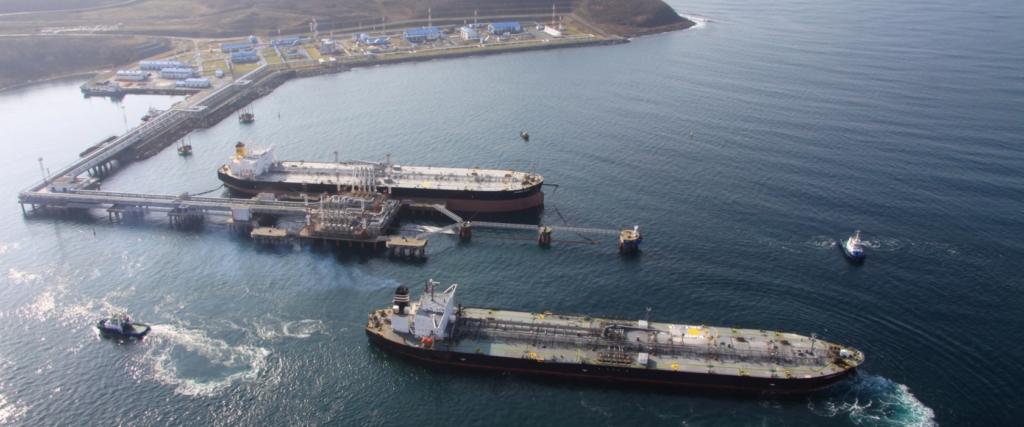
RoydadNaft – India has agreed to halt Russian oil purchases under a sweeping trade deal with the United States, marking a potential historic break in Moscow–New Delhi energy ties.
In exchange, Washington slashed tariffs on Indian goods and secured commitments exceeding $500 billion in U.S. energy and other imports.
The shift signals a strategic realignment toward the West, embedding India deeper into U.S. geopolitical strategy aimed at countering China.
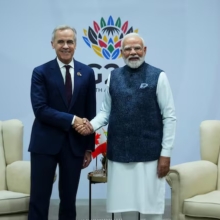
India’s decision to halt Russian oil purchases as part of a wider trade deal with the U.S. announced last week would mark the most dramatic rupture in Moscow-New Delhi energy ties in half a century if the commitment holds. And it comes at the precise moment Washington has been trying to force this break since the first weeks of the Ukraine war. For years, India has been one of the single biggest financial pressure?valves keeping Russia’s wartime economy alive – buying millions of barrels a day at steep discounts, refining them, and often sending the products back into global markets while Western governments warned that the trade was underwriting the Kremlin’s Ukraine war. Now, under the sweeping new trade deal with the U.S., Indian Prime Minister Narendra Modi has agreed not just to unwind that lifeline to Russia, but also to redirect India’s crude flows toward American and U.S.-aligned suppliers. If New Delhi follows through on its promise to end Russian oil purchases, the shift will strike directly at one of the Kremlin’s last dependable revenue streams, rewire India’s energy map, and signal a strategic realignment to the West that will ripple from Asia Pacific to the Middle East.
India’s agreement with the U.S. is built around a simple but far-reaching trade swap. In return for halting Russian oil imports, the U.S. has slashed its tariff burden on Indian goods from 50% to 18%, reversing the punitive layers imposed last year as New Delhi kept buying discounted Russian barrels. Modi has also committed to buying over US$500?billion worth of U.S. energy, technology, agricultural products, coal, and other goods – a scale of commercial alignment that goes far beyond crude flows. Indian refiners have already begun repositioning: Indian Oil Corporation (IOC), the country’s largest state-run refiner, is exploring ways to lift more U.S. crude and is open to Venezuelan barrels when they re-enter the market, while refiner Bharat Petroleum Corporation and Reliance Industries’ Jamnagar complex have pulled back sharply from Russian grades. Even before this latest announcement, India appears to have been working toward its new position on Russia, with the shift visible in the data. Russian exports to India have collapsed from 1.5?million barrels per day (bpd) a year ago to just 436,000?bpd in January, while U.S. shipments have risen and Middle East Gulf supplies have surged to 3?million?bpd. For Washington, the deal is designed to tighten the financial vice on Moscow; for India, it is framed as part of a broader diversification strategy at a moment when its energy demand is set to grow faster than any other major economy.
India’s retreat from Russian barrels lands hardest because it collides directly with a relationship that has been one of the most durable pillars of New Delhi’s foreign and energy policy for decades. Moscow has been more than just a supplier; it has been India’s strategic backstop – the source of cheap crude, discounted refined products, and the bulk of India’s legacy military hardware. Even after the Ukraine invasion, that relationship only deepened. Russia became India’s largest oil supplier almost overnight, providing up to 36% of its crude at the peak — around 1.8 million bpd — at steeply discounted prices compared to global benchmarks. At the same time, the two sides expanded defence cooperation, access to the geopolitically critical Arctic region, and joint logistics agreements that gave India a foothold in the Northern Sea Route. Putin’s visit last December to New Delhi underscored how central India had become to Russia’s sanctions?era survival: he promised uninterrupted fuel shipments, reaffirmed long-term energy ties, and folded India into the ‘Reciprocal Exchange of Logistics Support’ pact that opened Russian Arctic ports to Indian naval resupply. For Moscow, India was not just a customer but a geopolitical anchor – proof that Russia was not isolated and that its energy could always find a home. That is the context in which Modi’s new U.S. deal lands, and why the question now is not simply whether India can replace Russian barrels, but whether it is prepared to unwind a strategic partnership that has been stitched into its energy security, defence posture, and diplomatic identity for half a century.
Much of the answer now depends on whether Washington can sustain the discipline and strategic patience required to keep India inside this new geopolitical and economic framework, with the logic behind the 2 February announcement being the same that underpinned Trump’s original India strategy in his first term. One of the two key elements driving that thinking was the belief that India was finally ready to act as a pivotal counterbalance to China’s expanding power across the Asia Pacific region. That conviction hardened after 15 June 2020, when Indian and Chinese troops fought running battles in the Galwan Valley — the first deadly confrontation between the two countries since 1975. Washington read those clashes, and the smaller skirmishes that followed across the disputed frontier, as signs that India might be prepared to resist China’s expanding economic and military footprint through the Belt and Road Initiative (BRI). It also hoped that this new assertiveness would spill into India’s long-stalled ‘Neighbourhood First’ policy, giving the U.S. a partner capable of offering a credible alternative to Beijing’s BRI network. Crucially, India’s rapid economic rise was also expected to drive a huge expansion in its demand for oil and gas, with the International Energy Agency projecting it would account for 25% of global energy demand growth over the next two decades. For Washington, that demand surge could be the lever for the second element of the strategy: drawing key Middle Eastern energy producers deeper into the U.S. orbit by tying them into India’s growth story.
The central aim of this second part of the strategy rested on using India’s emergence as the Asia Pacific’s next major demand centre to reshape the Middle East’s strategic alignment. If India was set to drive a quarter of global energy demand growth over the next two decades, then the states supplying that demand – Saudi Arabia, the UAE, and others – would have powerful incentives to anchor themselves inside a U.S.-directed regional order. That order revolved around expanding the network of Arab-Israel normalisation deals (‘Abraham Accords’), strengthening Israel’s security position, and pulling key Gulf producers back from the gravitational pull of Iran, Russia, and China. The logic was simple: tie Middle Eastern producers into India’s growth story, tie India into a long-term partnership with the U.S. and use that combined leverage to rebuild a regional architecture that could contain Iran’s nuclear ambitions without triggering a wider war. The 2 February deal is the first time this design has been activated at scale, with Washington now adding its own oil and gas supplies to ensure India’s needs can be met without Russian barrels. The question from here is whether the U.S. can deliver on the trade, defence, and energy commitments that make this architecture credible — because without that follow-through, it looks likely that India will hedge, the Gulf will drift, and the strategic window Washington has opened could close as quickly as it appeared.