
Global Crude Oil Prices Today (January 8, 2026) / Brent Oil Rises to $60.25
RoydadNaft – Oil prices climbed on Thursday after two days of declines, boosted by a larger-than-expected draw in U.S. crude inventories that encouraged futures buying, while traders kept a close watch on developments in Venezuela.
Reported by Roydad Naft, Brent crude futures gained 29 cents, or 0.48%, to $60.25 per barrel (as of 0718 GMT), while U.S. West Texas Intermediate crude rose 26 cents, or 0.46%, to $56.25 per barrel.
Both benchmarks had fallen more than 1% for the second straight day on Wednesday, as market participants anticipated abundant global supply this year. Analysts at Morgan Stanley forecast a potential surplus of up to 3 million barrels per day in the first half of 2026.
The recent drops prompted some traders to seize the opportunity for bargain buying on Thursday, according to Mitsuru Muraishi, an analyst at Fujitomi Securities.
He said: “Bargain hunting has pushed prices slightly higher, but ongoing oversupply concerns are limiting further gains. While markets are monitoring Venezuela developments, the downward trend is likely to persist for now.” He predicted WTI could fall below $54.
U.S. crude inventories dropped 3.8 million barrels to 419.1 million barrels in the week ending January 2, according to the U.S. Energy Information Administration—contrasting with analysts’ Reuters poll expectation of a 447,000-barrel increase.
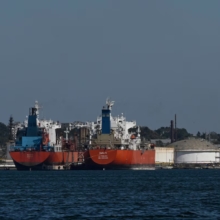
The United States seized two Venezuela-linked oil tankers in the Atlantic Ocean on Wednesday, one operating under a Russian flag, as part of President Donald Trump’s aggressive efforts to control oil flows in the Americas and pressure Venezuela’s socialist government into becoming an ally.
Washington announced on Tuesday that it had reached a deal with Caracas for access to Venezuelan crude worth up to $2 billion. Trump posted on social media that day that Venezuela would “turn over” 30 to 50 million barrels of “sanctioned oil” to the U.S.
This could provide an outlet for Venezuelan oil flows, which have slowed due to the U.S. blockade on sanctioned tankers entering and leaving the country. Redirecting this oil to the U.S. might reduce the need for Venezuela to cut production due to storage constraints, according to ING analysts.
Sources told Reuters that the deal may initially involve rerouting cargoes originally destined for China.
Chinese independent refiners, which consume much of Venezuela’s imports, may switch to Iranian oil to cover the shortfall.
Trump and his advisers are planning a long-term initiative to dominate Venezuela’s oil industry. According to a Wall Street Journal report on Wednesday, the president has told aides he believes his efforts could drive oil prices down to $50 per barrel.
The report, citing informed sources, said the plan under consideration includes U.S. control over Venezuela’s state oil company PDVSA, involving the purchase and marketing of the bulk of its production.