
Kazakhstan’s Oil Output Falls After Ukraine Drone Attack on Major Terminal
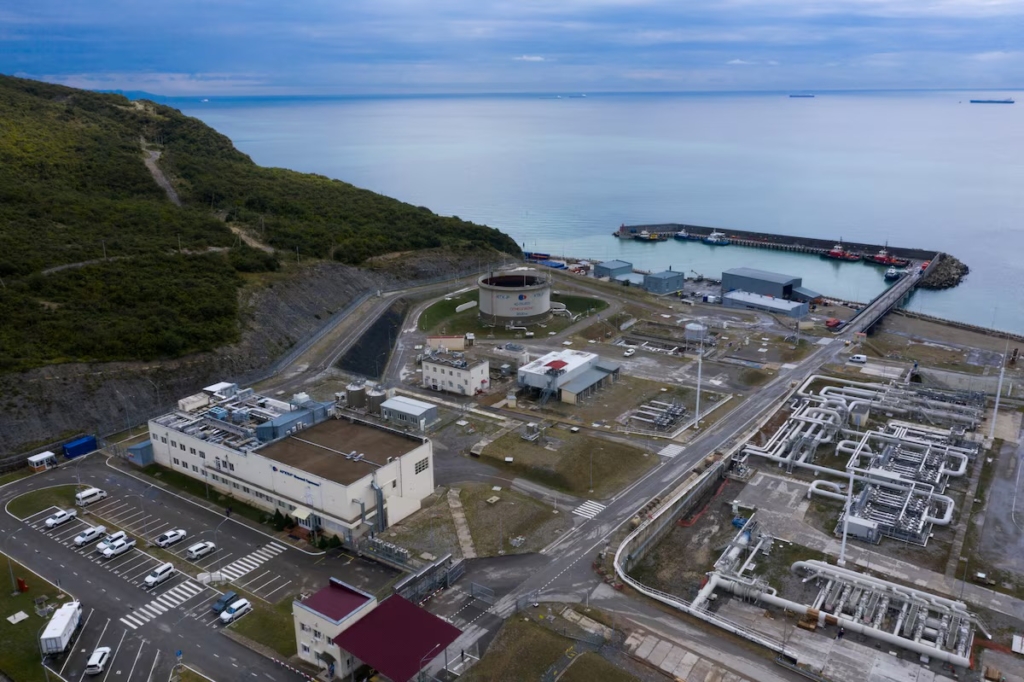
RoydadNaft – Kazakhstan’s oil production has fallen by roughly 6% this month, primarily due to reduced output at the massive Chevron-led Tengiz oilfield, following a Ukrainian drone strike that damaged a key Russian Black Sea export terminal, according to an industry source on Monday.
In recent months, Ukraine has stepped up strikes on Russian energy infrastructure in an effort to reduce Moscow’s revenue streams and weaken its military capabilities.
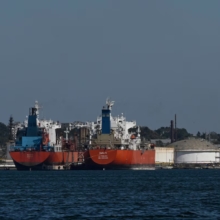
The drone attack on November 29 targeted the Yuzhnaya Ozereevka oil terminal operated by the Caspian Pipeline Consortium (CPC), which handles about 80% of Kazakhstan’s oil exports. The incident disrupted exports not only for Russia but also for Kazakhstan, prompting criticism from the Kazakh government.
The anonymous source, citing the sensitivity of the matter, reported that Kazakhstan’s combined oil and gas condensate production — making it the world’s 12th-largest oil producer — dropped 6% in the first 28 days of December compared to November’s average, reaching 1.93 million barrels per day.
At the Tengiz field, located in northwestern Kazakhstan along the northeastern Caspian Sea shore, output declined 10% to approximately 720,000 barrels per day during the same period.
Tengiz Expansion Set Back by Export Issues
Chevron, which first gained approval to develop the field under Soviet leader Mikhail Gorbachev in 1990, launched a $48 billion expansion project in January aimed at boosting production to around 1 million barrels of oil equivalent per day — nearly 1% of global supply. However, the current export bottlenecks have delayed progress toward that target.
Neither Kazakhstan’s energy ministry nor Tengizchevroil, the field’s operator and the country’s largest oil producer, responded immediately to requests for comment.
Sharp Drop in Kazakhstan’s Oil Exports
The November drone strike has led to Kazakhstan’s CPC Blend exports hitting their lowest level in 14 months this December.
The CPC terminal serves as the primary loading point for oil from Kazakh fields run by major Western companies, including Chevron, Exxon Mobil, Eni, and Shell.
According to the source, Kazakhstan’s exports alone through the terminal plunged 19% in December so far compared to November’s average, falling to 1.082 million barrels per day. The pipeline also carries a smaller volume of Russian oil.
To compensate, Kazakhstan has rerouted some exports to alternatives like the Baku-Tbilisi-Ceyhan pipeline.
Additionally, flows through the Atyrau-Samara pipeline into Russia — part of the route supplying oil to Germany — rose nearly 25% this month to 255,500 barrels per day.
Since the November 29 attack, the CPC terminal has been running on just one mooring point (SPM-1), after SPM-2 was taken out of service due to the damage. SPM-3 has been offline since mid-November for planned maintenance, which has been delayed by poor weather. Normally, two mooring points are active, with the third as a standby.