
India Faces Pressure Over Russian Oil Imports Shift
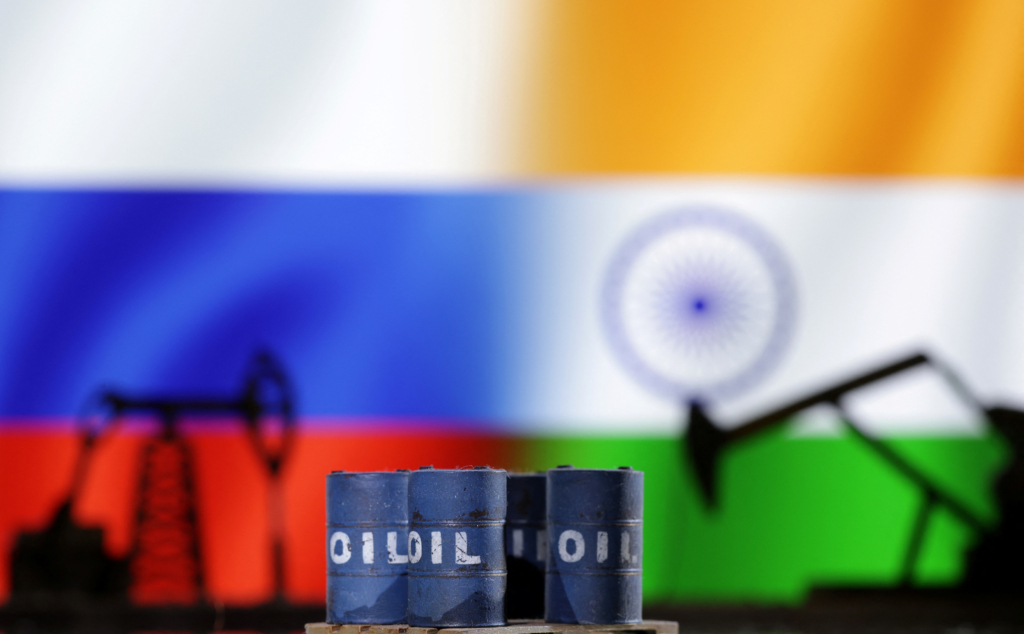
RoydadNaft – U.S. tariffs and diplomatic claims put India’s balancing act between cheap Russian oil and American demands under the spotlight as officials and industry await hard data on import cuts.
Since Russia’s invasion of Ukraine in 2022, India has emerged as one of Moscow’s most significant crude oil buyers, capitalizing on steep discounts offered by Russia amid sweeping Western sanctions. But as geopolitical tensions escalate and the United States intensifies efforts to curtail Russia’s war chest, India’s energy calculus has come under unprecedented scrutiny—and pressure.
On October 16, 2025, a White House official told Reuters that following recent U.S.-India trade talks, Indian refiners had already slashed Russian oil imports by 50%. The announcement, if borne out by shipping data, could mark a pivotal shift in India’s delicate balancing act between affordable energy and diplomatic allegiances. However, Indian industry insiders were quick to push back, telling Reuters that such reductions had not yet appeared in shipment data and might only be visible by December or January, since orders for November loadings had already been finalized. The officials at India’s oil ministry and major refiners remained silent, with no formal government directive issued to reduce Russian imports thus far.
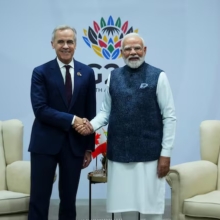
This uncertainty highlights the complexity of India’s energy policy, which is increasingly caught between its historic ties to Moscow and mounting pressure from Washington. The U.S. administration under President Donald Trump has been particularly vocal, pressing New Delhi to scale back its purchases of Russian oil. In late August, President Trump imposed a 25% “secondary tariff” on Indian exports as punishment for buying Russian oil, stacking it atop a 25% reciprocal tariff already in place as part of his broader trade rebalancing push. Six weeks later, Trump claimed Prime Minister Narendra Modi had agreed to halt Russian crude imports altogether.
Yet, the Indian government has been clear in distancing itself from these claims. The Ministry of External Affairs (MEA) denied any recent conversation between the two leaders, stating, “On the question of whether there was a conversation or a telephone call between Prime Minister Modi and President Trump, I am not aware of any conversation yesterday between the two leaders,” according to MEA spokesperson Randhir Jaiswal during his weekly briefing. He further clarified, “As per my information, there was no phone conversation between PM Modi and President Trump yesterday,” adding that the last phone conversation was on October 9, 2025.
India’s official stance remains steadfast: its energy policy is “guided strictly by national interests and the need to protect consumers amid volatile markets.” The MEA emphasized, “India is a significant importer of oil and gas. It has been our consistent priority to safeguard the interests of the Indian consumer in a volatile energy scenario. Our import policies are guided entirely by this objective.”
But the stakes are high. In 2024, India—the world’s third-largest oil importer—purchased $52.7 billion worth of Russian crude, accounting for 37% of its oil bill. Imports of Russian oil surged from just 4 million tonnes in 2021-22 to over 87 million tonnes in 2024-25, driven by discounts that often ranged from 10% to 14%, saving India roughly $5 billion a year or 3–4% of its crude import bill, as reported by the BBC. While the Gulf states of Iraq, Saudi Arabia, and the UAE saw their share of India’s oil market fall by 11 percentage points, their actual export volumes remained steady as India’s overall crude imports rose from 196 million tonnes to 244 million tonnes in the same period. The increase in Russian oil came largely at the expense of other suppliers such as the U.S., Brazil, Kuwait, Mexico, Nigeria, and Oman, whose exports to India more than halved.
Russia’s envoy in Delhi, Denis Alipov, responded to the latest developments by reiterating that Russian oil is “very beneficial for the Indian economy and for the welfare of Indian people.” The Russian Urals blend, a medium-to-heavy crude, is particularly compatible with India’s refinery infrastructure, which is calibrated for such grades. Ajay Srivastava, a former Indian trade official and head of the Global Trade Research Initiative (GTRI), explained, “Most Indian refineries are calibrated for heavier crude grades similar to Russia’s Urals blend. Replacing those with light U.S. shale would require costly reconfiguration and could cut yields of diesel and jet fuel.”
For Delhi, the trade-off is stark: continue with discounted Russian oil and risk U.S. retaliation, or shift to costlier Middle Eastern and American grades and face higher domestic fuel prices. As Srivastava put it, “Russian oil offers price stability and refinery compatibility.”
Washington’s pressure campaign has already escalated trade tensions. The delayed India-U.S. trade deal hangs in the balance, and the choice between short-term savings and long-term strategic costs could shape the next phase of bilateral ties. The U.S. has framed the issue as both a geopolitical and economic imperative, arguing that reducing Russian oil imports is essential for sanctions compliance and global stability.
Yet, the economic rationale for India’s approach remains compelling. Despite some perceptions, India does not rely solely on Russian oil. In 2024, it bought $7.7 billion of American petroleum products—including $4.8 billion of crude—but still ran a $3.2 billion petroleum trade deficit with Washington, according to the GTRI. The savings from discounted Russian oil, while modest at under 1% of India’s $900 billion goods and services import bill, still add up to a substantial $9 billion. As Partha Mukhopadhyay of the Centre for Policy Research observed, “If India were to halt Russian purchases, global oil prices could rise, wiping out those savings and adding even more to import costs—not just for India, but worldwide.”
Interestingly, oil prices have already fallen 27% in 2025, dropping from $78 to $59 per barrel—illustrating the volatility of the global market and the challenges in predicting the impact of any single country’s import decisions. Weak demand in the overall market also means other countries could potentially compensate for the 4–5% of global production that India’s Russian oil imports represent.
As the world watches, the true scale of India’s import cuts will become clearer once December–January shipping data emerges. If confirmed, the move could signal closer alignment with Western pressure on Moscow and strengthen U.S.-India energy cooperation. But it may also test India’s long-term energy security and its enduring ties with Moscow, a key defense and trade partner. For now, India’s energy policy remains a high-wire act—balancing affordability, refinery compatibility, and diplomatic relationships in a world where the price of oil is as much about politics as it is about economics.
In the coming months, India’s choices will ripple far beyond its borders, shaping not only its own economic future but also the global energy landscape and the evolving dynamics of great power rivalry.