
Iran, Vietnam explore joint investment, financial cooperation
RoydadNaft – Iranian and Vietnamese officials and private-sector representatives discussed ways to expand joint investment and financial cooperation, with a focus on building long-term economic ties and using Vietnam as a gateway to Southeast Asia.
Mehdi Azadvari, head of the Association of Iranian and Foreign Joint Investments, said cooperation with Iran’s Financial Center, the World Business Organization and several Iran–Vietnam and ASEAN joint chambers of commerce was on the agenda, with negotiations under way to expand partnerships centered on joint investment.
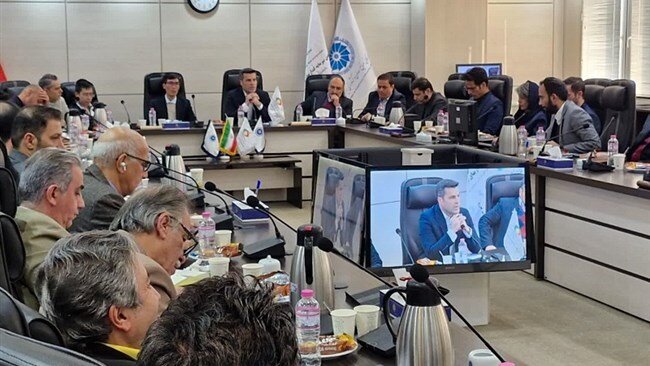
Speaking at the association’s seasonal gathering at the Iran Chamber of Commerce, Industries, Mines and Agriculture (ICCIMA), Azadvari said the association’s newly elected board had signed several memoranda of understanding with domestic and foreign institutions over the past three months to improve services for members.
He described the association’s participation in the Kish Investment Exhibition as a turning point that raised its profile among economic actors, adding that Kish Free Zone’s visa-free access for foreign nationals made it a suitable hub for international investment events. Talks are under way with the Supreme Council of Free Zones and the Kish Free Zone Organization to formalize cooperation, he said.
Azadvari said a proposed strategic framework, still at draft stage, aimed to position the association as a credible reference body for supporting joint investments between Iran and other countries. He said the association’s mission focused on expanding networks, advisory services, member advocacy and social responsibility to strengthen Iran’s economic brand.
He listed attracting foreign investors, increasing joint projects, improving international cooperation quality, technology transfer and enhancing Iran’s investment image as key objectives, noting the need for clear action plans, performance indicators and transparent reporting.
Hadi Shahpar, a member of the association’s investment committee, said one weakness of Iran’s foreign trade had been the short-term nature of economic relations. He said the association was seeking to build structured, long-term partnerships based on regional agreements and economic blocs.
Shahpar identified ASEAN economies including Vietnam, Malaysia, Indonesia, Thailand and Singapore as major global growth centers, describing Vietnam as a potential entry point for Iran into Southeast Asia. Despite more than five decades of diplomatic ties, he said bilateral trade remained below potential.
He cited construction materials, petrochemicals, technology, agriculture and coffee as current areas of cooperation, saying there was scope to expand joint investment across these sectors.
Vietnam’s deputy ambassador and a representative of the country’s Ministry of Industry and Trade said Hanoi was ready to serve as a conduit for Iranian products and technologies into Southeast Asian markets, pointing to Iran’s capabilities in petrochemicals, agriculture and advanced technologies.
They said Vietnam’s embassy and trade office in Tehran were prepared to provide support and information to Iranian companies seeking to enter the Vietnamese market.
Participants agreed to pursue practical cooperation between the association and the Vietnamese embassy to facilitate Iranian companies’ market entry, with the stated aim of increasing Iran’s share in Vietnam’s market and building durable economic links between the two countries.