
India and Nepal Deepen Economic Ties Through Landmark Trade, Energy and Infrastructure Initiatives
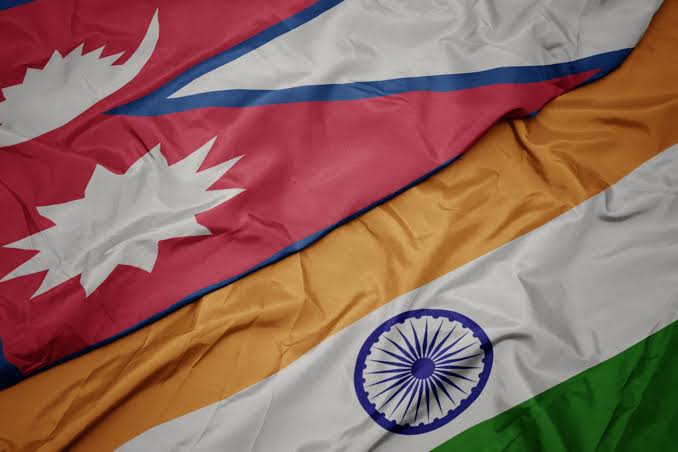
RoydadNaft – India and Nepal are accelerating their economic integration with a series of high-impact projects and policy reforms that span trade facilitation, clean energy, digital payments and cross-border infrastructure, Nepali and Indian sources reported on Sunday.
A major milestone came last month when the two neighbours amended their long-standing Treaty of Transit to allow rail-based freight movement – including bulk cargo – between Jogbani in Bihar and Biratnagar in Nepal. The liberalised protocol will eventually cover additional key corridors, significantly boosting Nepal’s multimodal connectivity not only with India but also with third countries.
In a first for the Himalayan nation, Indian Oil Corporation (IOCL) has begun exporting liquefied natural gas (LNG) to Nepal following the commissioning of cryogenic storage and regasification facilities at Simara. The move marks a shift toward cleaner industrial fuel and underscores growing energy cooperation aimed at sustainability.
Hydropower remains the centrepiece of the partnership. The 900 MW Arun-3 run-of-the-river project, developed by India’s state-owned SJVN Limited on the Arun River in eastern Nepal, is progressing rapidly. Upon completion, Nepal will receive 21.9 per cent of the generated electricity free of cost for domestic use, along with substantial royalties, while the remainder will feed into India’s national grid to meet rising demand. The project is also expected to spur rural electrification and infrastructure development in the project area.
On the digital frontier, Unified Payments Interface (UPI) transactions from India are now interoperable with Nepal’s FonePay QR network, enabling seamless cross-border retail payments – a facility that proved particularly valuable during the Covid-19 pandemic when physical borders were restricted yet bilateral trade continued uninterrupted.
Tourism promotion is receiving renewed focus, with both governments pushing to develop circuits in lesser-known cultural and scenic regions beyond traditional hotspots.
Analysts describe the raft of initiatives as evidence of a maturing relationship that leverages Nepal’s hydropower and tourism potential alongside India’s vast market and technical expertise, forging what officials on both sides call a “shared economic future” rooted in centuries-old civilisational links.