
Canada-Alberta pipeline deal set to boost oilsands emissions

RoydadNaft – A historic “Grand Bargain” between Prime Minister Mark Carney’s federal government and Alberta Premier Danielle Smith, expected to be unveiled Thursday, will pave the way for a new one-million-barrel-per-day oil pipeline to Canada’s West Coast while attempting to shore up the country’s faltering industrial carbon-pricing system.
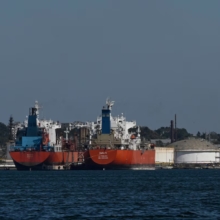
The agreement is poised to unlock higher oilsands expansion by giving producers access to Asian markets via tanker exports – almost all Canadian crude currently flows south to the United States – but analysts warn it will drive up national greenhouse gas emissions and make Canada’s 2030 climate targets even harder to meet.
Current oilsands output stands at roughly 4.7 million barrels per day. Filling a new million-bpd pipeline would require substantial production growth in Alberta’s carbon-intensive bitumen sector.
The Pembina Institute calculates that even if the $16.5-billion Pathways Alliance carbon-capture project is fully built, emissions from the expanded oilsands would still exceed today’s levels. “You would need roughly eight Pathways-scale projects to decarbonize the additional barrel that goes into that pipeline,” said Ian Sanderson, senior oil and gas analyst at Pembina.
On the climate side, the deal is expected to include federal backing for “carbon contracts for difference” – a mechanism that guarantees companies a minimum price (well above the current ~$25/t currently traded in Alberta) for emissions-reduction credits. Supporters say this would restore the business case for costly decarbonization investments and protect the industrial carbon price from future political rollback.
Michael Bernstein, executive director of Clean Prosperity, called the potential reform “a possible watershed moment for decarbonization,” provided the design is robust.
Environmental groups and climate scientists, however, argue that pairing pipeline expansion with carbon-price tweaks amounts to greenwashing growth in one of the world’s most emission-intensive forms of oil production.
The agreement marks a dramatic turnaround in federal–Alberta relations after years of pipeline battles and carbon-tax disputes, with both leaders framing it as a pragmatic compromise between energy development and climate ambition.
Details of the final package are expected Thursday.