
Trump Shortens Deadline for Sanctions on Russian Oil, Raising Global Supply Fears
RoydadNaft – U.S. President Donald Trump unexpectedly shortened his deadline for hitting Russia with the most severe sanctions on its oil exports to date. While the market has called the president’s bluff thus far, the sheer scale of the threat may force investors to start pricing in this meaningful tail risk.
The sanctions would slap 100% tariffs on buyers of Russian oil, with the biggest customers being India and China.
This move has the potential to disrupt global oil supplies, given that Russia exported 4.68 million barrels per day of crude oil in June, around 4.5% of global demand, as well as 2.5 million bpd of refined products, according to the International Energy Agency.
Will Trump actually follow through on his threat? That’s anyone’s guess.
Going through with the secondary tariffs on Russia risks causing a severe spike in oil prices that could put upward pressure on U.S. inflation, an outcome that could stay Trump’s hand, even if he is “disappointed” in Russian President Vladimir Putin.
And there have been several headline-grabbing moments in recent months where the Republican president has rowed back on his threats, including the “reciprocal tariffs” originally announced on April 2 that he quickly toned down in the face of market pressure.
So his erratic Russia policy may make some investors wary of writing off the risk altogether.
BLUNT TOOL
The next question is, would secondary tariffs – a relatively untested, blunt financial weapon – be effective? The answer is probably yes.
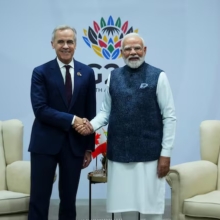
One of Russia’s key customers, India – the largest importer of seaborne Russian crude in June at 1.5 million bpd – is currently engaged in tense trade talks with the United States. New Delhi is therefore unlikely to want to exacerbate trade tensions with Washington and thus may be apt to ditch Moscow in favour of new, though undoubtedly more expensive, energy sources.
But the Kremlin’s finances would still be squeezed regardless if India were to cease purchasing Russian oil, as China would likely be able to buy it even more cheaply.
TIT FOR TAT
The scale of the potential new sanctions’ impact on the global oil market is hard to gauge, given current supply and demand dynamics.
World oil demand is expected to grow by 700,000 bpd in 2025, its lowest rate since 2009, while supplies are forecast to rise sharply by 2.1 million bpd to 105.1 million bpd this year, according to the International Energy Agency.
The growth in supply has been driven in recent months mostly by output increases by the Saudi Arabia-led oil producing group collectively known as OPEC+. The group in April started unwinding 2.2 million bpd of production cuts and upped the United Arab Emirates’ production quota by 300,000 bpd.
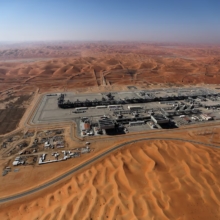
The OPEC+ production increases have led, naturally, to a decline in the group’s spare production capacity, but Saudi still held, as of June, 2.3 million bpd of production it can bring on stream within 90 days, while the UAE and Kuwait held 900,000 bpd and 600,000 bpd of spare capacity, respectively.
This means that the three Gulf producers could ramp up output relatively quickly in the event of a sudden supply disruption.
But that knowledge is unlikely to be enough to calm markets should Trump impose his secondary sanctions, partly because of the uncertainty surrounding possible retaliatory measures by Moscow.
Putin is therefore likely to respond quite forcefully to any western measures constraining his revenue.
Trump’s latest threat could be an empty one, but regardless, it has shortened the fuse of a timebomb that oil markets might struggle to ignore.