
Canadian opposition, oil CEOs call for scrapping federal carbon price system
RoydadNaft – The future of Canada’s six-year-old carbon pricing system is on shaky ground after 14 oil and gas CEOs and the political opposition leader this week called for its repeal. Scrapping the system, which aims to reduce pollution by giving heavy industry a financial incentive to cut carbon emissions, however, puts the viability of the high-profile Pathways Alliance carbon capture project in doubt.
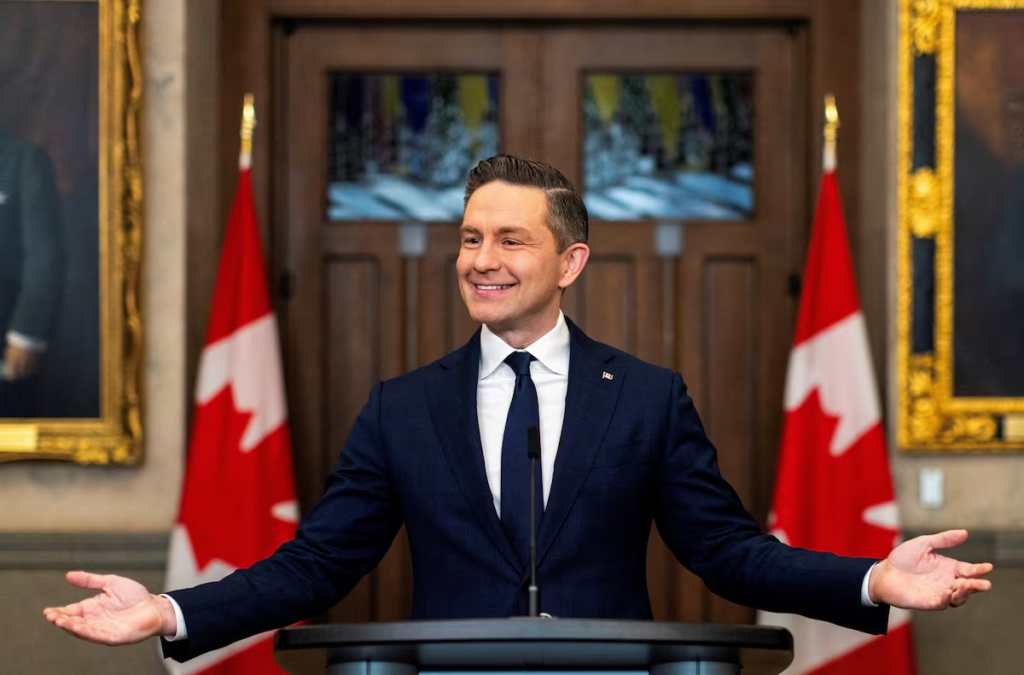
Poilievre said he would scrap the federal rules and replace them with expanded federal incentives such as tax credits to encourage companies to cut pollution. Carbon pricing decisions would then be left to individual provinces.
Under the current law, industrial operations whose emissions exceed a permitted threshold must either pay the government or buy carbon credits to offset their impact. The system is designed to become more stringent over time, with the price of carbon increasing at specified intervals.
In an open letter this week, 14 Canadian oil and gas CEOs said the federal scheme should be repealed to allow provincial governments to “set more suitable carbon regulations.”
And on Friday, the Pathways Alliance, a group of Canada’s six biggest oil sands producers that proposed a C$16 billion ($11.47 billion) carbon capture and storage project aimed at significantly reducing the industry’s greenhouse gas pollution, added to the criticism.
Pathways posted a statement on its website emphasizing the need for federal policies that will “grow Canada’s oil sands” and called for doing away with the “uncompetitive industrial carbon pricing system.”
Many provinces, including the oil-producing province of Alberta, already have their own industrial carbon pricing system in place. Under current rules, provincial systems must be as stringent as the federal system.
The CEOs argued in the letter that the national scheme puts the country at a competitive disadvantage compared with jurisdictions that do not have one, such as the U.S.
Many analysts, however, say large-scale corporate investments in decarbonization do not make sense without the financial incentive of a price on emissions.
“Until there is clarity on the future of policy . . . we are unlikely to see that (Pathways) investment materialized,” said Michael Bernstein, CEO of the think-tank Clean Prosperity.
DISCUSSIONS SLOWED
The oil sands industry is Canada’s heaviest-emitting sector, and the Pathways proposed project would be one of the largest carbon capture and storage developments in the world, if completed. Pathways filed regulatory applications for a pipeline to transport carbon last March, but it has not made a final investment decision to go ahead with the project.
In an interview with Reuters this month, the CEO of Canadian Natural Resources acknowledged challenges related to the looming election and uncertainty about the future of energy and climate policy.
“If you look at that combined with the views of the administration in the U.S., on tariffs and so forth, those discussions on Pathways have slowed somewhat,” CEO Scott Stauth said.
In recent months, Pathways has been in talks with the federal government to provide a backstop to the industrial carbon price, aiming to insure against a future government eliminating carbon pricing.
No agreement has been reached.
A weakened carbon pricing system would leave governments with little way to incentivize projects like the Pathways plan, other than through direct subsidization, said Chris Severson-Baker, executive director of clean energy think-tank the Pembina Institute.
“It (Pathways) might just end up becoming another thing the taxpayers are paying for.”