
Varcoe: Canadian oil producers face $7B hit from Trump energy tariffs — but U.S. consumers would see $22B wallop, study finds
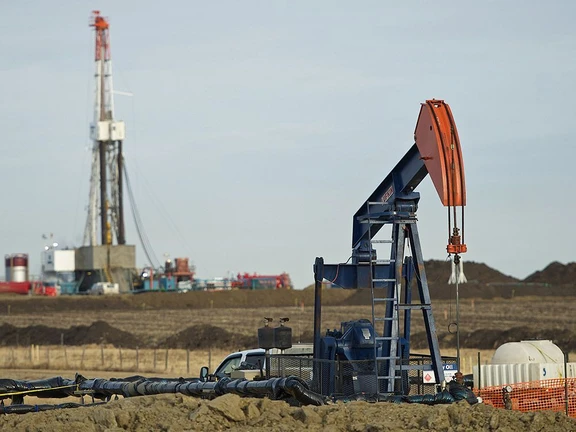
RoydadNaft – In a business world that strives for the win-win, U.S. President Donald Trump may achieve the rare lose-lose for consumers and producers with proposed tariffs on Canadian energy — but a windfall for U.S. government revenues.
A new report by Goldman Sachs estimates just how large losses would be for companies and consumers on both sides of the border.
For Canadian oil producers, a 10 per cent U.S. tariff on energy would represent a nearly US$7-billion hit to their profit margins, the study finds.
For American consumers, the potential wallop to their pocketbooks is even larger: $22 billion.
Noon News Roundup
Your weekday lunchtime roundup of curated links, news highlights, analysis and features.
By signing up you consent to receive the above newsletter from Postmedia Network Inc.
However, oil tariffs would generate an estimated $20 billion of revenue for the U.S. government annually, and potential gains for traders, marketers and some American refiners.
“A modest 10 per cent tariff on oil would mostly transfer revenues from (non) U.S. producers and U.S. consumers to the government and refiners-marketers,” states the report by analysts at Goldman Sachs.
“We estimate a $6.9-billion annual tariff burden on Canadian oil producers . . . in the form of lower corporate profit margins (as opposed to lower production volumes).”
The countdown continues this week on the U.S. administration’s plans to impose tariffs against its partners in the North American free trade deal. Levies on imports are expected to start as early as next week.
Trump told reporters Monday that tariffs on Canada and Mexico imports — set at 25 per cent for all products, except for energy — “are going forward on time, on schedule.”
While the political rhetoric continues, many Canadian industry leaders and analysts are trying to determine exactly how a U.S. levy on energy would affect the cross-border flow of oil and natural gas.
“How it is shared with refiners versus producers, we don’t know,” Whitecap Resources CEO Grant Fagerheim said in an interview last week.
“We are all looking at it.”
Canada exports about four million barrels per day (bpd) of oil into the U.S., mainly by pipeline, making up more than 60 per cent of imports to the country.
Last year, Canada sold $171 billion of energy products into the U.S., underscoring the extensive integration of the North American energy system.
A research note by Scotiabank aptly pointed out this month that U.S. tariffs on Canadian energy would be a “lose-lose” for both countries, as it’s “likely to make all parties worse off.”
“We believe tariffs on Canadian energy will reduce realized prices for Canadian producers, compress U.S. refining margins . . . and increase prices for U.S. consumers.”
The Goldman Sachs report concludes 10 per cent tariffs would not significantly increase U.S. oil production, but would see producers from outside the country shoulder about $10 billion in annual costs.
Heavy crude from north of the border would be discounted “and continue to flow to the U.S., given export constraints for Canadian oil and because U.S. refiners are uniquely equipped to process heavy crude,” it states.
Prices received by Canadian producers would largely be discounted to offset the tariff.
“The main reason is that Canadian producers’ limited ability to find alternative export markets makes them, to a large extent, a ‘captured seller’ to U.S. refiners,” the study states.
The report assumes a $4-a-barrel drop in Western Canadian Select (WCS) heavy oil prices, as Canadian producers with “limited alternative export options” would absorb 75 per cent of the nearly $6-a-barrel tariff.
It estimates American consumers would pay $22 billion annually due to the energy tariffs, or $170 per household. This pinch would mainly be concentrated in the U.S. East and U.S. West Coast, where discounting of imported barrels isn’t expected and refiners can’t easily replace imports.
Tariffs would likely raise product prices for the entire 16.8 million barrels of refined products consumed in the U.S. each day, including fuel sourced from domestic oil, according to the study.
It estimates traders, marketers and refineries would see a $12-billion tariff tailwind, while the U.S. government would raise $20 billion annually.
Some experts aren’t convinced Canadian producers will end up footing the bulk of the tariff tab. They note refineries in the U.S. Midwest and other regions rely on Canadian heavy oil and have limited replacement options, although there is debate about their ability to switch to U.S. crude.
Energy economist Rory Johnston, founder of the Commodity Context newsletter, said the assumption that Canadian producers will pay for three-quarters of U.S. tariffs is larger than his estimates of closer to a 50-50 split.
It also doesn’t account for actions that could shift some costs, such as re-exporting more Canadian barrels out of the U.S. to other countries, or Alberta adopting production curtailment to support WCS oil prices.
“It’s still very debatable as to what the actual shakeout is going to be,” Johnston said. “At the end of the day, those Midwest refiners need to compete for Canadian crude to fill their refineries.”
Tristan Goodman, president of the Explorers and Producers Association of Canada, believes any tariff burden will be shared, pointing out there isn’t a large backfill of heavy crude that can easily replace Canadian oil.
The Canadian dollar has also drifted lower and, to some extent, that should help cover some of the tariff costs, he noted.
However, Goodman believes tariffs will be avoided.
“We need each other,” he said. “We are highly integrated, and it’s going to hurt both countries.”
Canadian producers facing tariffs would “take some of this on the chin” but part of the costs would also be passed through to U.S. consumers, said Patrick De Haan, head of petroleum analysis at U.S.-based GasBuddy.
If Canada didn’t retaliate with counter-tariffs, the levy could amount to an increase in pump prices of 10 to 25 cents a gallon in some U.S. regions, he estimated.
However, there are also longer-term implications to the North American energy relationship to consider, De Haan added.
“I’m not worried about the minor 10 or 20 cents a gallon discount. I’m worried about the signal this sends to the Canadian marketplace,” he said.
“I’m worried that it shakes the reliability of U.S. partnerships in a way that could ultimately cost the United States in the long run.”
Chris Varcoe is a Calgary Herald columnist.