
’New beacon of hope’: India’s oil demand growth offers abundant opportunities for global suppliers
RoydadNaft – India — the world’s most populous nation — is expected to account for one quarter of global oil demand growth in 2025, which gives New Delhi “an immense sway” in international energy markets, writes Gaurav Sharma in consultant Wood Mackenzie’s Energy Connects.
Last year, India — with its burgeoning economy growing at around 6% — imported considerably more than 4 million barrels per day of crude oil.
“That pace of importation will likely be maintained this year with most forecasters predicting an economic growth rate at par with last year, or even higher at around 6.5%,” noted Sharma.
“Furthermore, Prime Minister Narendra Modi’s administration also hopes to position India as an export hub of petroleum products and distillates, cracked by an estate of 23 refineries and counting.”
Foreign direct investment is being courted to enhance India’s pipeline network and develop liquid exports infrastructure, and such developments may further boost crude imports.
Consequently, India’s growing needs now regularly catch the eye of market statisticians and forecasters, said Sharma.
The US Energy Information Administration (EIA) in December forecast that India is poised to overtake China and account for a quarter of global oil demand growth in 2025, which it projected in the region of 1.3 million bpd for the year.
“Driven by rising demand for transportation fuels and fuels for home cooking, consumption of liquid fuels in India is forecast to increase by 330,000 bpd in 2025 — up from 220,000 bpd in 2024,” the EIA stated.
Meanwhile, Opec and the Paris-based International Energy Agency respectively pegged this year’s global oil demand growth at 1.45 million bpd and 1.1 million bpd, with both saying India would account for a significant part of that demand growth.
“Cognisant of the cost permutations of a cyclical commodity that trades in US dollars, Indian importers are becoming as deft at hedging strategies as any other major oil importer. But India’s market clout and the world’s desire to business with Delhi, has seen it diversify its pool of crude oil suppliers at a phenomenal pace,” commented Sharma.
Last year, India’s tally of suppliers increased from 27 to 39 countries. Further updates are to be expected at the upcoming India Energy Week 2025 — a showcase of investment opportunities in the country’s multifaceted energy sector, he said.
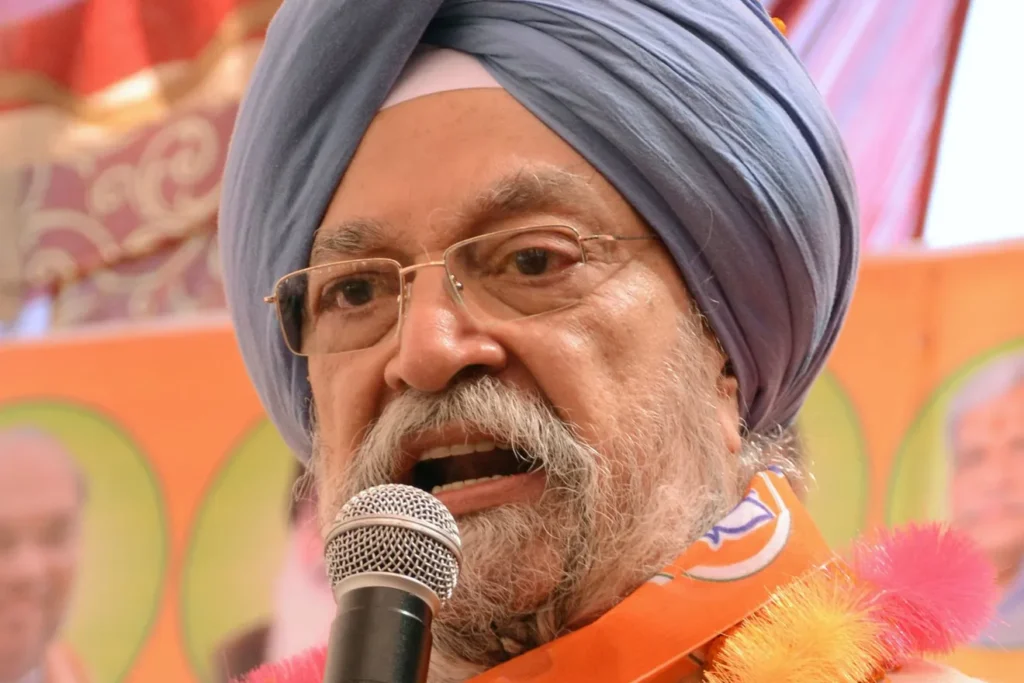
India’s Minister for Petroleum and Natural Gas, Hardeep Singh Puri, appears spoilt for choice and wants his country to remain agile in terms of sourcing crude oil globally at competitive prices.
“We know the Indian economy will account for 25% of the near to medium-term global increase in demand over the coming years. We are a large importer and find there is no shortage of crude in the world,” Puri said last September at Gastech 2024 in Houston, US.
Indeed, market conditions coupled with India’s buying strategy has seen it source crude oil from Malaysia to Brazil and other countries in between without much difficulty, noted Sharma.
And with the tightening of US sanctions on Russian oil imports in January, and a return of President Donald Trump to the White House, Delhi’s attention has rapidly shifted to securing the barrels it needs from elsewhere including Brazil, Guyana, Oman and the US, he said.
“We should expect a similar sort of a source shifting agility over the coming years. That’s because by 2030, India’s economy is expected to be the world’s third largest, behind only the US and China. It seems the global oil market’s big new beacon of hope in 2025 will likely be just as big, if not bigger, as the turn of this decade approaches.”
India Energy Week 2025, organised by DMG Events, will take place in New Delhi from 11 to 14 February.