
India responds to Chinese vessel activity by enhancing offshore exploration
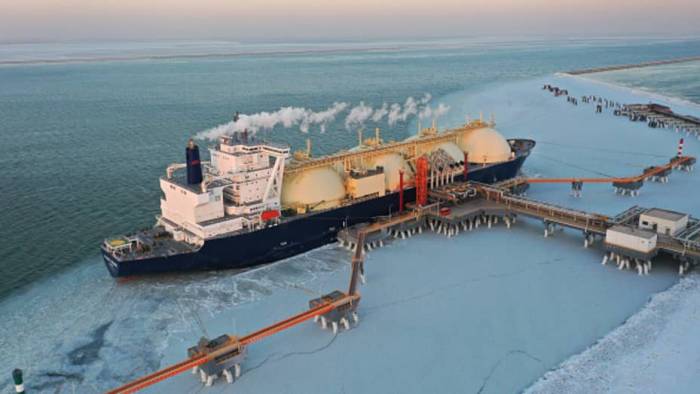
RoydadNaft – India, the world’s third-largest oil consumer, continues to make significant strides in strengthening its energy security and reducing its dependence on hydrocarbon imports. In the context of growing geopolitical challenges and domestic energy demand, the government is developing strategies that could dramatically shift the country’s energy balance. This strategy includes actively exploring offshore areas beyond the Exclusive Economic Zone (EEZ), indicating long-term plans to ensure sustainable economic growth and strengthen its international position.
The Indian government plans to involve leading national companies, Oil and Natural Gas Corporation (ONGC) and Oil India Ltd, in exploring the continental shelves of the Bay of Bengal and the Arabian Sea, News.Az reports citing neftegaz.ru .
This move can be seen as a strategic response to the increased presence of Chinese research vessels near the Indian coast. The project will not only strengthen India’s sovereignty over its maritime territories but also assess the potential for hydrocarbon and mineral extraction, contributing to the country’s economic security.
In July 2024, India’s Minister of Petroleum and Natural Gas, Hardeep Singh Puri, emphasized the need to increase oil and gas production domestically. According to him, India has about 651.8 million tons of crude oil and 1,138.6 billion cubic meters of natural gas. The country plans to expand the exploration area to 1 million square kilometers by 2030, an ambitious goal reflecting India’s aspiration for energy independence. This will enable the country to better cope with challenges related to global energy market fluctuations and geopolitical instability.
India also intends to invest 75 billion rupees (about 90 million USD) in developing technologies and collecting new data necessary for exploring complex areas. These investments include funding for stratigraphic wells and aerial surveys to obtain seismic data on promising basins such as Kerala-Konkan and the Mumbai offshore basin on the west coast, as well as the Mahanadi and Andaman basins on the east coast. Collecting and analyzing data from these areas are key elements in assessing the potential of offshore fields, which could become the foundation for the future development of India’s energy sector.
Offshore fields play a crucial role in ensuring India’s energy security. On the west coast, there are important sites like the Mumbai High oil field and the Basin, while on the east, ONGC is actively investing in hydrocarbon extraction, attracting about 10 billion USD. The special DSF round in May 2024, offering two small fields on the Mumbai offshore shelf, demonstrates India’s commitment to maximizing available resources. It also shows the country’s readiness for innovation and new approaches in resource development.
India is actively engaging international companies in exploration cooperation. In 2020, a subsidiary of Rosgeologia, Sevmorneftegeofizika, signed a contract with ONGC to conduct seismic surveys on India’s continental shelf. This became Rosgeologia’s largest overseas contract in history.
In July 2024, a meeting took place between the management of Rosgeologia and an Indian delegation to discuss future cooperation prospects. India’s Deputy Minister of Mines, K. Rao, invited the Russian company to participate in tenders for exploration work.
India faces the complex challenge of balancing domestic energy needs with international environmental commitments. The country’s quest to reduce dependency on hydrocarbon imports requires significant efforts and investments in developing its energy sector. Offshore exploration, cooperation with international companies, and increased domestic oil and gas production are key elements of a strategy that could significantly enhance India’s energy security and independence in the long term. Implementing these plans requires decisive action, careful planning, and effective utilization of available resources.