
Iran’s Flaring Crisis: Burning Gold and Polluting the Environment
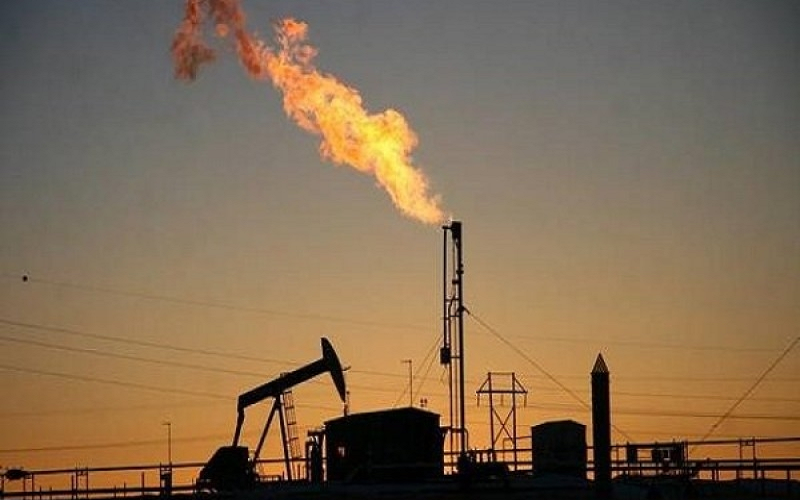
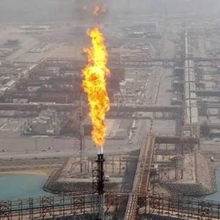
RoydadNaft – One of the most pressing issues in Iran’s energy industry is the widespread flaring of associated natural gas in oil fields, a practice that amounts to burning valuable resources and contributing to environmental degradation.
This long-standing tradition not only inflicts billions of dollars in economic losses on Iran but also carries severe consequences for the environment, such as acid rain.
In a country where millions of people face power outages, the data reveals a startling reality: the associated gas burned in Iran’s oil fields could provide electricity to nearly a third of the nation’s population.
During crude oil production, natural gas, primarily composed of methane, is released as a byproduct known as associated gas.
Historically, when the demand for natural gas consumption was low, producers had little incentive to collect and sell it, leading to the practice of flaring – burning off the gas.
However, natural gas has long since become a valuable resource for electricity generation and a crucial raw material for the petrochemical industry.
Flaring not only wastes a precious natural resource but also contributes significantly to air pollution and global warming by releasing large amounts of greenhouse gases, such as carbon dioxide, into the atmosphere.
Consequently, many countries have prohibited flaring, except in emergencies or for safety reasons, and not as a continuous practice. Iran, however, remains an exception in this regard.
Environmental Consequences of Flaring
The burning of unrefined associated gas from Iran’s oil fields produces sulfur oxides, leading to acid rain and environmental pollution problems. Acid rain damages trees, vegetation, and can acidify surface water, causing severe ecological harm.
While global oil production has grown by approximately 30% over the past two decades, flaring has decreased by 15%, reflecting the efficiency and commitment of the global oil industry to reduce its environmental impact.
However, the situation in Iran stands in stark contrast. In 2021, four countries accounted for almost 50% of the total gas flared globally, with Iran being one of them.
Despite the pollution caused by flaring, the Iranian government has not taken any substantial action to address this issue.
Lack of Environmental Protection and Oversight
The absence of a powerful institution dedicated to environmental protection, coupled with the negligent approach of the Ministry of Oil, has created an environment where flaring is considered easier than collecting, purifying, and utilizing the associated gas properly.
While small projects have been implemented to collect the gas, they have proven insufficient.
Iran ranks as the second-highest country in the world for flaring, with an annual flare rate of 18.4 billion cubic meters in 2021, trailing only Russia.
This translates to a daily flaring volume of 50.5 million cubic meters, equivalent to the capacity of about two phases of the South Pars gas field.
Although Iran produces less crude oil than the other major oil-producing countries, it appears to flare significantly more gas than its oil production would suggest.
Assessments indicate that the intensity of flaring based on Iran’s oil production in the past year is about three times the global level, and the intensity of flaring based on natural gas production in Iran is almost twice the global level of this index.
Energy Wastage and Economic Losses
From the perspective of energy wastage, the comparison of the amount of flaring in the country with the daily consumption of gasoline reveals a staggering reality: the energy loss caused by flaring is almost equivalent to half of Iran’s daily gasoline consumption.
In conclusion, Iran’s flaring crisis represents a significant economic and environmental challenge. By addressing this issue through robust environmental protection measures, investment in gas collection and utilization infrastructure, and a commitment to sustainable practices, Iran can unlock substantial economic benefits while mitigating its contribution to global warming and environmental degradation.